
One of our family’s favorite songs to play in the car here in Israel is a feel-good anthem called “Al Tira Yisrael,” (“Have No Fear, Israel”). The version we listen to, by Israeli singer Itay Levi, is meant to inspire confidence during the difficult period following October 7. Its refrain includes a quote from the Biblical Book of Amos: “Do not fear Israel, do not be afraid, / For are you not a young lion?/ And if a lion roars—who won’t be afraid?/ Who won’t be afraid?”
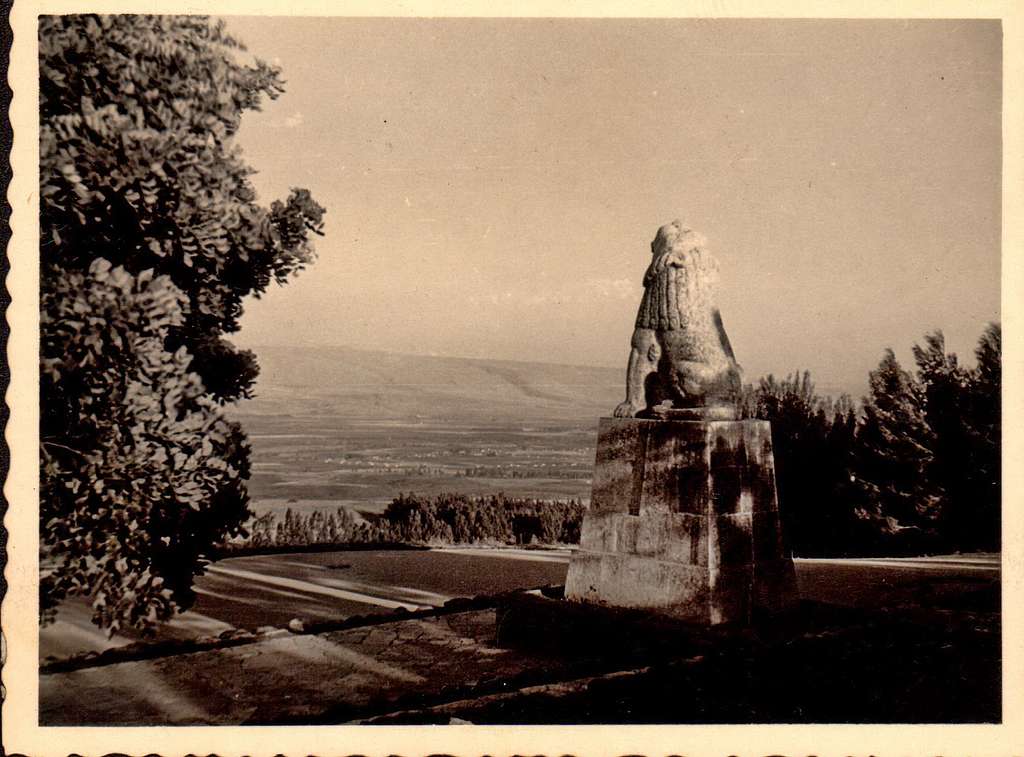
The sentiment of Israel roaring like a lion reached its pinnacle during the “Sha’agat HaAri” (“Lion’s Roar”) joint US–Israeli campaign against Iran, which took place between Purim and Pesach this year. This, too, draws on Amos and suggests continuity with the “Rising Lion” campaign that took place against Iran one year ago in June. Yet a closer reading of Amos reveals a more complex context for the line, “If a lion roars, who will not be afraid?” One might even ask whether its fear is meant for our enemies or for our own society.
Amos was a Judean shepherd and farmer living in the eighth century bce in a place called Tekoa, located on the edge of the desert southeast of Jerusalem. Despite living in a time of relative tranquility, he is called upon by G-d to warn the inhabitants of the Northern Kingdom of Israel, largely residing in Samaria, to stop their corrupt behavior or face destruction. Amos prophesies using rich and vivid literary language. The lion is one recurring motif among many that the prophet employs to stunning and devastating effect.
Rabbi Yitzchak Etshalom, a well-known Tanach teacher based in Los Angeles, authored a wonderful volume entitled Amos: The Genius of Prophetic Rhetoric published by Maggid Books, an imprint of Koren Publishers in Jerusalem. The book is part of a series of scholarly volumes that address specific Biblical books. Each book is designed to be read on its own but also serves as a learning supplement. It offers deep, line-by-line analysis of a book’s language that is sensitive to the history of traditional interpretation, as well as to its historical and archaeological context, and to a peshat-based “close reading” of the text itself. In this spirit, Rabbi Etshalom’s Amos marries rabbinic interpretation with scholarly analysis, while demonstrating an unyielding dedication to making sense of Amos’s brilliant but dense and sometimes elusive prophetic rhetoric.
For the full review see the Summer 2026 Issue of Jewish Action Magazine
 The Book of Books