A Covenant of Earth and Sky

In the early hours of June 13 my family and I, like all Israelis, were awakened by the shrill sound of a phone alert. Israel had preemptively attacked Iran’s nuclear facilities. Momentous news, but I promptly put my pillow over my head and went back to sleep. Only when we woke up again later that morning did we realize that something historic had occurred. We also understood that a challenging period lay ahead.

We had only recently moved into a new home and, despite Houthis sporadically firing missiles in our direction, we had grown lax about running to our safe room, what Israelis call a mamad. Ours was filled with dust and leftover construction material. But on the day of the phone alerts—once we’d grasped the gravity of what was happening—we got to work. We spread a plastic mat over the floor, brought in a spare mattress, and set up a pack-and-play crib. The missile fire from Iran began in earnest that evening.

As the days wore on, we adjusted to the confines of this small space where emotions vacillated between fear, comfort from the presence of those we loved, and occasional irritation by those very same people. One mattress turned into four—each of our seven children laid claim to their own little spot. The more time we spent in our safe room, sometimes joined by friends or near strangers who needed a place to shelter, the more we acclimated ourselves to its deprivations and, occasionally, to its surreal benefits. Sociologists talk about the “third place,” which is an additional living space beyond home or work, like a synagogue, for example. These places expose us to people, ideas, and experiences beyond our immediate family and daily routines. During Israel’s twelve-day war with Iran our safe rooms also became a third place, introducing a new mentality and way of being that removed us from our day-to-day lives.

Read the full article, just recently posted online, from the Fall issue of Lubavitch International Magazine.

Kuma: The Story of the Jewish People

The Bible Lands Museum in Jerusalem is known for its collection of Near Eastern antiquities from the Biblical period. Yet amidst its galleries stands a startling cultural artifact of far more recent origin.

Kuma—meaning “Rise”—is a nearly ten-foot-long scroll depicting a dense, vivid, intellectually rich, and aesthetically stunning account of Jewish history. Its full title, Kuma, Mei Afatzim ve-Kankantum,” refers to the materials used to prepare ink for Torah scrolls and other sacred texts. Evoking an unfurled Torah scroll, Kuma is the high-school senior project of a brilliant young yeshiva student, artist and poet named Eitan Rosenzweig הי”ד. Staff Sgt. Rosenzweig, an Alon Shvut native and student in the Yerucham Yeshivat Hesder, served in the Givati brigade and was killed in Gaza in November 2023, at the age of 21.

Kuma weaves together Jungian theories of the unconscious, the mythologist Joseph Campbell’s concept of the heroic journey, and imagery drawn from Western art and Jewish history—some of which appear elsewhere in the Bible Lands Museum. Kuma also incorporates literary allusions to the Bible, Talmud, modern Hebrew literature, Eastern and Western general philosophy, and more. It is a work of art that one must study rather than merely observe.

The full essay can be read at Tradition Online.

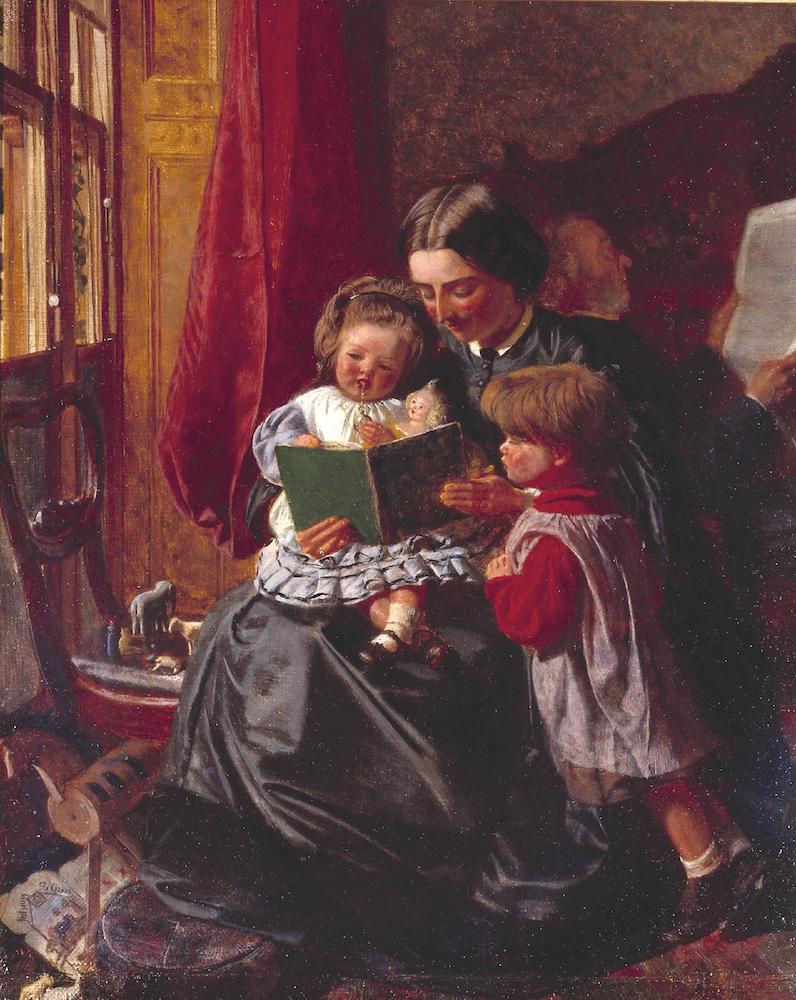
Children of the Book

“Books, even works of genius, are not incandescent orbs that exist independently in some kind of ether. For books to have enduring value, they must be read by people. For those readers to exist, they must be born and raised.”

Was a pleasure to review Ilana Kurshan’s fantastic new book for the Summer issue of Tradition, now available online.

Three Ways in Which Operation Rising Lion is a Lot Like Narnia

Note: I recently started a Substack so this post appears both there and here on WordPress. I’m going to try to keep both platforms updated so please feel free to choose the one which you prefer and unsubscribe or turn off notifications from the second so you don’t see my updates twice.

From the deluge of fascinating news from Israel’s remarkably successful “Rising Lion” operation against the Iranian regime, one interesting tidbit relates to children’s literature, of all things. According to the Israeli newspaper Yediot Ahronot, IDF intelligence began to assemble a list of the leading scientists driving the Iranian nuclear weapon program in 2022, and their research efforts were given the secret code name “Narnia.” At 3:00 am on June 13, when the Israeli Air Force swiftly eliminated 10 of these scientists, along with striking the Natanz nuclear plant and other military targets, the operation was officially dubbed “Operation Narnia.”

a blue book with a picture of a man walking through the woods
Photo by Tim Alex on Unsplash

In describing the operation, the Jerusalem Post writes that name “reflects the operation’s improbable nature, like something out of a fantasy tale rather than a real-world event.” Indeed, it was hard to believe that the same country that suffered such devastating losses on October 7 due to intelligence failures could execute such a meticulously planned and perfectly executed military offensive. Yet there are many fantasy tales, and the name Narnia is much more than a metonym for all that is improbable or unlikely to occur. Could it be that somewhere in Israeli intelligence circles there is a fantasy geek who specifically chose this code name to evoke a specific connection with the literary world of Narnia? Perhaps. In the meantime, Israeli schools and all other activities are cancelled and we are stuck at home. So I find myself reading Narnia with some of my kids, perhaps for the third time. In our bleary-eyed and underslept state thanks to 2:00 am trips to the safe room, these are the connections that seem to emerge:

1- Narnia is Israel and Calormen is Iran

man sitting beside river painting
Photo by British Library on Unsplash

While some readers of Narnia stop at the famous first book, The Lion the Witch and the Wardrobe, the later books in Lewis’ series introduce us to other lands and cultures which surround Narnia and in doing so offer pointed parallels to the geopolitics of Lewis’ own time. One of these countries is a Middle-Eastern type of desert nation called Calormen, characterized by a hodgepodge of Persian and Arabian motifs: “The Calormenes have dark faces and long beards. They wear flowing robes and orange-coloured turbans, and they are a wise, wealthy, courteous, cruel and ancient people”. Calormenes have many admirable qualities, like a rich culture of storytelling to which Lewis’ narrator is obviously sympathetic, and splendid landscaping and food. Yet while it may outshine Narnia on the material front, it lacks basic freedoms which prevents the full flourishing of its people. Everyone in the society understands their place in a rigid hierarchical structure, and all are required to slavishly try to curry favor with their vainglorious leader the Tisroc. In the capital city Tashbaan, “there is only one traffic regulation, which is that everyone who is less important has to get out of the way for everyone who is more important; unless you want a cut from a whip or punch from the butt end of a spear.” When a poor boy raised in Calormen is mistakenly identified by the Narnians as a member of their party he is smitten with these joyful, bright-eyed people who seem to live without paranoia and insecurity. Yet he can’t help but lie about his identity, as the narrator explains: “he had, you see, no idea of how noble and free-born people behave.”

The individuals we meet in Calormen aren’t all that bad, but centuries reared in a culture where deception and obsequiousness, rather than hard work and talent, are needed to get ahead certainly takes its toll on the moral character of the society. Lewis contrasts this with Narnia, where freedom is cherished, and consequently people develop virtues like courage, honesty and kindness.

Now Narnia may be intended as a stand-in for Lewis’s own England, but in the spirit of William Blake’s “Till we have built Jerusalem / In England’s green & pleasant Land,” I believe there are some parallels with Israel too. While Israel is certainly influenced by its Middle-Eastern surroundings, it is an informal culture where people by and large have the freedom to speak their mind and determine their own destinies. Unlike nearly every other great military power in history, it never set its sight on building empire and controlling other nations. Like Narnia, it is content with merely perpetuating its own way of life within its own borders. Thus it remains a mystery why countries like Iran seek its destruction so vehemently and for so long. If it remains baffling to us, King Edmund of Narnia does offer a kind of answer. In trying to make sense of the curious urge in Calormen to wage war on Narnia, Edmund observes: “We are a little land. And little lands on the borders of a great empire were always hateful to the lords of the great empire. He longs to blot them out, gobble them up” (A Horse and His Boy, p. 68).

Israel right now is doing a lot to make Iran angry, but this anger predates airstrikes in Tehran by decades, and is rooted in the same lust for empire that C.S. Lewis observed during his own dark times. Our response must be the same as it is in the world of Narnia, to push back against Islamic expansionism through military defense, and also to cherish all of the qualities that make our culture unique and worth preserving.

2- Rising Lion

brown lion
Photo by Mika Brandt on Unsplash

When Narnians go into battle, the symbol that is displayed on their flags and shields is a lion. The lion of course is a reference to Aslan, the spiritual icon of Narnia and a Christological metaphor. The reason Jesus is associated with a lion is rooted in the Bible of course, “the lion of Judah,” and in Judaism lions are associated with kingship and sovereignty. Thus it’s also not surprising that “rising lion” is the name and symbol of the current Israeli campaign. The name “Rising Lion,” which is a translation of “Am KiLavi Yakum,” derives from the Prophet Balaam’s blessings of the People of Israel in the book of Numbers: “Behold, a people that rises like a lioness and raises itself like a lion. It does not lie down until it eats its prey and drinks the blood of the slain.” (Num. 23:24) Some unhinged Israel haters have pointed to this verse as proof of Israeli thirst for atrocities. The verse is obviously meant to be symbolic, but the truth is, lions are fearsome creatures who devour their prey. And we have learned over the past twenty months that, in order to defeat evil and restore peace and order to the world, we must be stronger and fiercer than our enemies. This does not always look nice. But that does not mean that it is not a moral posture. Here too, the Narnian parallel can be illuminating. When Susan first learns about the great lion of Narnia she is understandably scared: “Is he—quite safe?” I shall feel rather nervous about meeting a lion.” Mr. Beaver responds: “Safe? . . . Who said anything about safe? Course he isn’t safe. But he’s good. He’s the King I tell you” (The Lion, the Witch and the Wardrobe, p. 80.)

The current IDF campaign in Iran, and even more so, the extended war against Hamas in Gaza, contains visuals that are terrible and painful to behold. But as Lewis’s narrator reminds us, “People who have not been in Narnia sometimes think that a thing cannot be good and terrible at the same time.” What lions symbolize, in the Bible, in the world of fantasy and right now, is the way in which ferocity and justice must, in certain circumstances, work hand in hand. Critics of Israel’s campaign who are supposedly driven by religious pacifism may also take note another verse in Balaam’s litany of blessings directed at the Jewish people: He crouches and lies like a lion and like a lioness; who will dare rouse him? Those who bless you shall be blessed, and those who curse you shall be cursed” (Num, 24:9)

3-Pacifism is Not a Virtue

This brings me to a final point about some of the well-meaning critics, many of them Christian, of Israel’s courageous campaign against evil and America’s supporting role in that effort. While many fairy tales end with a vague “happily ever after,” Lewis takes care to remind us at the end of the Lion, the King and the Wardrobe how the four Pevensie children, now turned kings and queens, spend their days making good laws, keeping the peace, and waging honorable battles in defense of their beloved Narnia. The first progressive in the series is their annoying cousin Eustace Clarence Scrubb, who surfaces in the Voyage of the Dawn Treader when he accidentally gets sucked into a grand voyage with Edmund and Lucy through a painting. Eustace is just awful, a bully and a stick-in-the-mud who has no use for the grand adventures of the sort for which the Pevensie children live. Eustace’s coddled upbringing has given him few opportunities to appreciate the real dangers that exist in the world, although this thankfully changes when he is turned into a dragon. The privilege of distance from danger allows him the freedom to antagonize everyone around him and avoid retribution by declaring “I’m a pacifist. I don’t believe in fighting.”

Lewis was, indeed, critical of those who could never distinguish between a just war and pointless bloodbath. He viewed this problem as similar to an inability to distinguish good from evil. As early as 1940, Lewis delivered a lecture to the pacifist society at Oxford University entitled “Why I am Not a Pacifist,” in which he articulates, from various angles, a justification for wars that need to be fought in order to protect higher values. This does not make the realities of war any less terrible. Yet only by recognizing human necessity can one begin to improve things.

Lewis says:

To avert or postpone one particular war by wise policy, or to render one particular campaign shorter by strength and skill or less terrible by mercy to the conquered and the civilians is more useful than all the proposals for universal peace that have ever been made; just as the dentist who can stop one toothache has deserved better of humanity than all the men who think they have some scheme for producing a perfectly healthy race.

To try to fight a better war, or a shorter or more precise war in which less civilians are killed, is a noble virtue. To avoid war altogether, in all circumstances, is simply a pipe dream that, as Lewis says in the same lecture, will result in “[handing] over the state which does tolerate Pacifists to its totalitarian neighbour who does not.”

Lewis’ analysis applies perfectly to Israel’s situation in its seven front war from Gaza to Iran. The war we fight now is intended to prevent future wars, to invite peace and prosperity to this beleaguered region as well as to other parts of the world. We are not waiting for a lion to save us from “beyond the sea.” We are an “am shel ariyot,” a nation of lions, fighting our hardest on behalf of our highest values. May the current conflict and this larger war come to a speedy, victorious and decisive conclusion.

One Life to Live: Torah U-Madda Today

In a new symposium at The Lehrhaus entitled “Reclaiming Torah u-Madda,” I was given the chance to reflect on the state of “Torah U-Madda” (the relationship between Torah and Western culture) in the Modern Orthodox community today. I sought to address this topic on a philosophical level, through an analysis of a wonderful story by Isaac Bashevis Singer, as well as through some “real-world” examples of how these ideas might play out in practice. My latter comments generated more controversy than I would have liked. I would like to emphasize that my account of what has challenged me personally about my native community is not meant to constitute a comprehensive indictment of all that is wrong with Modern Orthodoxy. My goal in the essay is to introduce a philosophical framework and then briefly suggest how this framework might cohere in real-life scenarios. I don’t mind disagreement about the relevance of these scenarios but I am even more interested in discussing the worldview that underlies them.

Please see here for the full article. And I recommend perusing all of the terrific contributions to this forum.

Living Antiquities: Ozick, Great Books & Judaism

A recent conversation over at Tradition Magazine discusses the potential relationship (or lack thereof) between “Great Books” and Judaism. I weighed in with the help of one particularly great book, Antiquities by Cynthia Ozick. Please read the full essay here.

An excerpt: “There are many wonderful cases to be made for the contributions of great books to our culture, our civilization, and to ourselves. But on a common-sense level, Menand is right. While people who love literature (myself included) can make a compelling case for why these texts enrich our lives, we cannot generalize that those who read great literature are on the whole better people than those who are interested in other matters. Countless well-known authors and literature scholars have been involved in every kind of sordid affair imaginable. Indeed, whenever a new anti-Semitic tinged crusade against the Jewish State pops up, literature departments are inevitably leading the charge. Menand writes that “knowledge is a tool, not a state of being.” To me there is no doubt that the experience of reading Cervantes or Jane Austen can generate profound insights into the complexity of human experience, and morally sensitive writers like George Eliot or Leo Tolstoy create a powerful case for virtue. Yet clearly something else is necessary in order to lay the foundations of a moral life in practice.”

For more on that “something else,” see my latest in Tradition.

Tom Stoppard and Theodor Herzl in Jerusalem

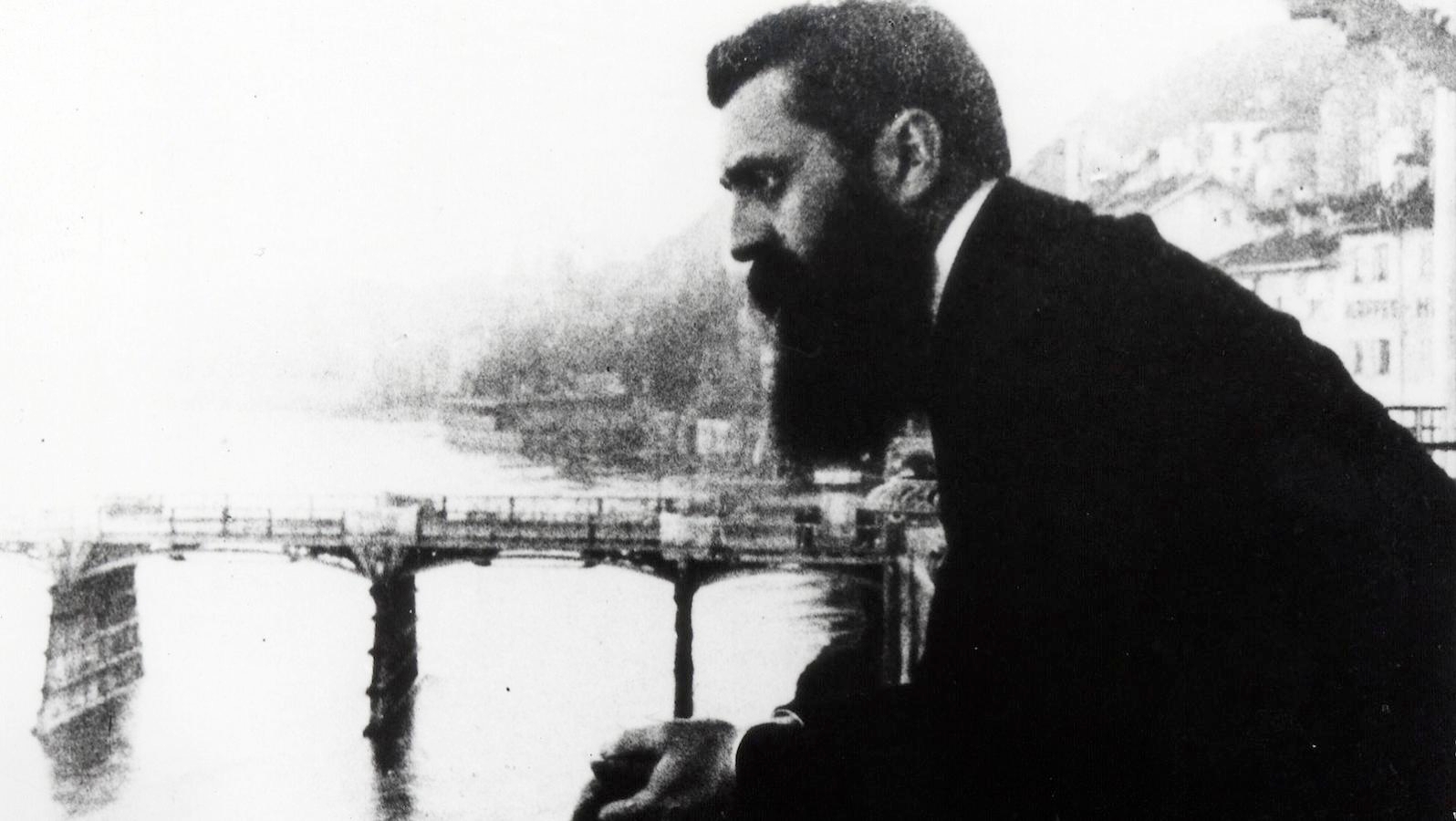
This past February 14th marked the 116th anniversary of the publication of Theodor Herzl’s manifesto The Jewish State, which lay the groundwork for the modern Zionist movement and the state of Israel. That same evening a special event took place in the Jerusalem Theater: a performance of Herzl’s play The New Ghetto, written in 1894, just a few short weeks before he began composing The Jewish State. It is commonly understood that the turning point for Herzl—the moment he realized there was no escaping from anti-Semitism even in enlightened Western Europe—was the Dreyfus Affair that began in the fall of 1894. Yet The New Ghetto, written shortly beforehand, is proof that, as some scholars have argued, a proto-Zionist sensibility had already been roiling in Herzl’s mind.

Last month’s production was a historic privilege for those who attended it: it was the first time the play has ever been performed in Israel. 

For more about this wonderful performance, as well as an intriguing parallel with Tom Stoppard’s newest play Leopoldstadt, please see my new essay in Mosaic Magazine.

Holy Folly: Using Humor to Reach for God

In his 1905 philosophical analysis of humor, Jokes and Their Relation to the Unconscious, Sigmund Freud cites a classic Jewish joke: “Two Jews met in a railway carriage at a station in Galicia. ‘Where are you going?’ asked one. ‘To Cracow,’ was the answer. ‘What a liar you are!’ broke out the other. ‘If you say you’re going to Cracow, you want me to believe you’re going to Lemberg. But I know that in fact you’re going to Cracow. So why are you lying to me?’”

On the surface, the joke is a self-deprecating jab at the Jewish tendency to overthink things. But on a deeper level (and for Freud of course there is always a deeper level) the joke comments on the difficulty of discerning truth. He asks, “is it the truth if we describe things as they are without troubling to consider how our hearer will understand what we say?” Freud proposes that jokes like the one above “attack not a person or an institution but the certainty of our knowledge itself.” He is struck by how many jokes of this nature are Jewish ones.

For the full article please see the wonderful Summer edition of Lubavitch International Magazine.

Jewish Continuity and Jewish Destiny: It’s Not Just About You

A Response to Is Jewish Continuity Sexist? by Mijal Bitton (Sources: A Journal of Jewish Ideas, Spring 2021)

“In delineating the various people and parties who could conceivably be offended by a Jewish continuity agenda, Bitton leaves out the most important population of all: the future humans upon whom the entirety of civilization rests. It’s true that having children is physically and emotionally taxing, and undoubtedly the burdens are unequally distributed between genders, at least for discrete periods in a child’s life. Some of these challenges can certainly be remedied; others are on a certain level inherent. Eve is told “in pain you shall bear your children,” and Adam too, is destined to work hard for all the days of life. Yet any account of these difficulties needs to be contextualized with at least a passing mention of the vast potential that accompanies bringing forth new life into the world.”

Please see here for the full response, thank you to Sources and to Mijal Bitton for the opportunity to reflect.

When Heidi Met Shimen, or, Why Real Religion Endures

A review of Judaism Straight up by Moshe Koppel

Several years ago, a blog called Judaism Without Apologies began to circulate on social media. The blog began by juxtaposing two Jewish characters’ lives and ideals: Shimen, a Gerer Hasid of sorts and Holocaust survivor living on the Upper West Side of Manhattan, and Heidi, a cosmopolitan Princeton graduate who thinks of herself as a citizen of the world.

A photograph by George Kalinsky of my own Polish Holocaust survivor grandfather at the Siyum HaShas in 1990. I imagine Shimen having a similar intense, independent-minded look.


The series was narrated by the American Israeli computer scientist Moshe Koppel, who had attended Shimen’s Gerer shtiebel in his youth. After obtaining a PhD in mathematics, Koppel spent a year at Prince- ton’s Institute for Advanced Study, where he met the original Heidi, the first of many he would encounter in the years to come. Koppel’s blog may have been rooted in comic sociology, but it quickly morphed into a serious discussion of moral philosophy, game theory, cultural anthropology, the nature of language, and ultimately an argument about the future of Judaism itself. Despite its rather niche appeal, the blog’s unique fusion of a no-holds-barred attitude with serious erudition attracted some diehard fans. Koppel has just published an expanded book-length version, which presents a cleaned-up and even more compelling defense of the old-fashioned Judaism Koppel imbibed in the shtiebel.

Shimen, a real-life acquaintance of Koppel (Heidi is a composite), is at the heart of the book. He survived the Lodz Ghetto and Auschwitz, but his wife and two precious children did not. After the war, Shimen picked up a handgun and collected Jewish children who had been hidden by Polish families and returned them to their communities. Elie Wiesel, who prayed in Shimen’s Gerer shtiebel from time to time, once told a story about celebrating Rosh Hashanah in Auschwitz without wine. An inmate announced, “we’ll take out tin cups and fill them with tears. And that is how we’ll make our kiddush . . . heard before God.” That, apparently, was Shimen. Koppel writes of Polish Hasidic Holocaust survivors like him: 

[They] were intense, they were angry, they could be funny in a biting sort of way. . . . But one thing they had no patience for was high-minded pieties. They despised pomposity and self-righteousness. Their devotion to Yiddishkeit, old-fashioned Judaism, as a way of life, and to the Jews as a people, were as natural and instinctive as drawing breath.

To read the full review see the wonderful new issue of Jewish Review of Books.