The Heirs of Asher Lev: Exploring the Art of Menachem Halberstadt and Hendel Futerfas

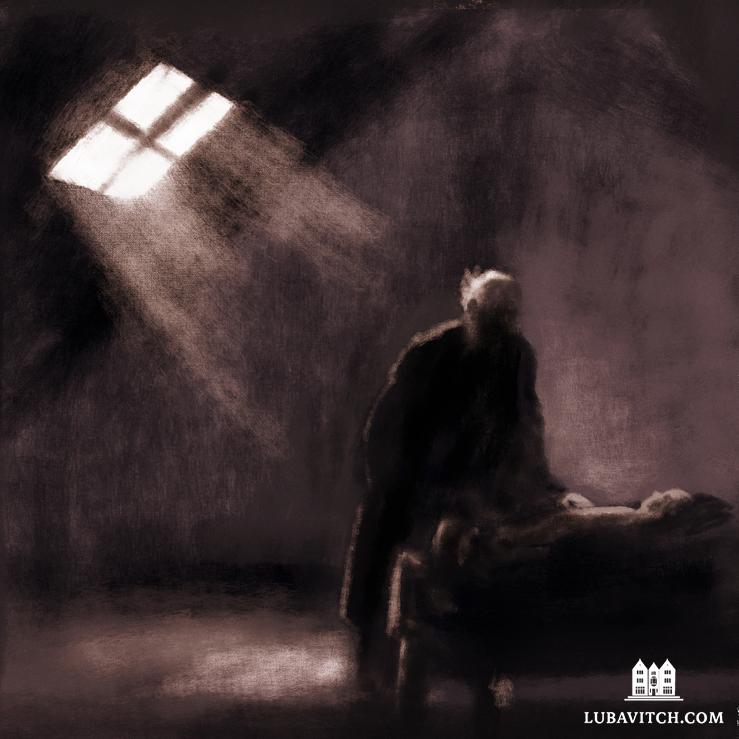
In Chaim Potok’s classic novel My Name Is Asher Lev, a young Chasidic boy tries to integrate his religious faith with his prodigious artistic talent. In school he scribbles on the margins of his sacred books. On weekends he takes clandestine trips to view Renaissance art at the Brooklyn Museum. Throughout the novel he grapples with the question: Is art something that brings us closer to G-d and to the Jewish people, or does it operate on another plane entirely? 

Asher Lev is a member of the Ladover sect, a thinly disguised stand-in for Chabad-Lubavitch, and the beloved Ladover Rebbe gently explains that it makes no difference whether a man is a shoemaker or a lawyer or a painter; rather, “a life is measured by how it is lived for the sake of Heaven.” Yet, despite the Rebbe’s encouragement, ultimately Potok’s book insists that the chasm between the life of a Chasid and that of an artist is impossible to fully bridge.

The role of visual art in the religious Jewish worldview has always been somewhat tenuous. This may be rooted in the Torah itself: the second of the Ten Commandments prohibits the creation of graven images and the “likeness of any thing that is in the heavens above, that is in the earth beneath, or that is in the water under the earth.” But it may also be an accidental byproduct of history: the destruction of the Holy Temple in Jerusalem in all its aesthetic glory, the exclusion of Jews from artistic guilds, and the overwhelming dominance of Christian iconography in the history of Western art. While Jewish decorative arts abound—micrography, illuminated manuscripts, silver Judaica items—Jewish representation in the fine arts, at least prior to the modern era, is decidedly less pronounced. And while Jewish individuals have achieved prominence as modern artists, they tend toward secularism and individualism in both worldview and artistic language. We have yet to see a uniquely Jewish artistic idiom arise—that is, a path forward for an artist who wishes to tie him- or herself to a Jewish tradition in visual art. 

To read the full article please see the gorgeous art-themed Fall/Winter Issue of Lubavitch International Magazine.

Between Heroism and Grief: One Day in October

It was an honor to review Koren Press’s outstanding new book One Day in October for the Jerusalem Post Magazine this past week. While the book is not necessarily “literary” in nature, it is brilliantly written and edited, and moved me in a way that few books have. This piece is actually an abbreviated version of a longer review essay that will hopefully appear in the Jerusalem Report in the coming weeks. Grateful to be part of this “עם של אריות,” “nation of lions,” whose incredible bravery continues to exhibit itself each and every day.

The Muses of October 7

“Some may find art galleries irrelevant amidst the geopolitical challenges Israel now faces, the profound physical and emotional injuries faced by its citizens, our ongoing fear for the hostages and for the soldiers fighting in Gaza and the north. But the art of October 7, like the phenomenal music that has emerged in its wake, is urgent and searing. It provides a visual prism through which we can try to understand our times, to memorialize those who were murdered and to scream over its injustice. ״

Walk the streets of Israel post-October 7 and one experiences a country transformed. This transformation manifests in many aspects of our lives: our political allegiances, our sense of certainty and security, and our attitudes toward one another. But our streets have also literally, physically, been transformed. Cars are bedecked in Israeli flags and bumper stickers that commemorate fallen loved ones and friends. The now iconic red-and-black hostage posters line storefronts and traffic poles (in Israel they don’t get ripped down). Army green is everywhere—at times every fifth person walking down the street seems to be in uniform and carrying a large weapon. And street art and graffiti that focuses on the hostages or the ongoing military campaign is ubiquitous. Grassroots memorials take various forms—from yizkor candles to red poppies (the classic symbol of military loss is also a common wildflower in the south of Israel) to countless other manifestations. This spontaneous public art is intense and concentrated in certain places, such as Hostage Square in Tel Aviv and the Nova massacre memorial in Re’im. But it also can be found on random street corners and benches, in malls or in doctor’s offices. Art is everywhere, a direct outcome of a nation that is actively grieving horrific events and continuing crises. 

Ziva Jelin, Panorama: Pavement and Mud, 2018, acrylic and tar on canvas. Photo credit: Ron Plitnitzki.

A new exhibit, recently opened at the ANU Museum of the Jewish People in Tel Aviv, seeks to explore this creative phenomenon in real time. The exhibit is simply titled “October 7.” It begins by considering the notion that art is irrelevant at the height of wartime, as expressed by the proverb “When the cannons are heard, the muses are silent.” Orit Shaham Gover, the chief curator of ANU, proposes this alternative: “As the cannons are heard, the voices of the muses are emerging all the more clearly from deep down in the throat.”

A full review of this moving exhibit can be read in Moment Magazine.

Shababnikim Season Two: Welcome to Rehavia

“On a bright spring day in a swanky Tel Aviv neighborhood, a handsome man sporting a trim beard and a perfectly perched black yarmulke alights from an expensive SUV. He kisses his beautiful and modestly clad wife, as three smartly dressed yeshiva boys across the street watch, swoon, and dream of similar lives for themselves. “A yeshiva boy who married well?” one suggests. “No, no—he earned it for himself!” his friend explains: After being expelled from a prestigious yeshiva for owning a smartphone, he flew to Rome, camped out for a week on the doorstep of Borsalino headquarters, and earned the right to open the first official Israeli chain of stores for the high-end Italian hatmaker. Although he is too busy earning money to study in yeshiva full time, he still dedicates time every day to study Talmud. “The modern haredi,” the boys say, sighing. “He enjoys both worlds. He has this and yet he also has that!” As they wave to him crossing the street, a large truck comes out of nowhere and plows into him. And so the show’s question remains: Is it really possible to have both this and that?”

Please check out the absolutely wonderful latest issue of Jewish Review of Books for a review of the second season of Shababnikim, a fabulous Israel television series with much more depth than initially meets the eye.

Of Synagogues and Seinfeld: “ANU,” The New Museum of the Jewish People

In March, the Tel Aviv Jewish museum formerly known as the Nahum Goldmann Museum of the Jewish Diaspora(or Beit Hatfutsot) reopened after a ten-year, $100 million renovation. Now called ANU—Museum of the Jewish People, it offers a cheery, inclusive vision of Jewish peoplehood.

For the full review see here, in the wonderful new Summer issue of the Jewish Review of Books.

When Heidi Met Shimen, or, Why Real Religion Endures

A review of Judaism Straight up by Moshe Koppel

Several years ago, a blog called Judaism Without Apologies began to circulate on social media. The blog began by juxtaposing two Jewish characters’ lives and ideals: Shimen, a Gerer Hasid of sorts and Holocaust survivor living on the Upper West Side of Manhattan, and Heidi, a cosmopolitan Princeton graduate who thinks of herself as a citizen of the world.

A photograph by George Kalinsky of my own Polish Holocaust survivor grandfather at the Siyum HaShas in 1990. I imagine Shimen having a similar intense, independent-minded look.


The series was narrated by the American Israeli computer scientist Moshe Koppel, who had attended Shimen’s Gerer shtiebel in his youth. After obtaining a PhD in mathematics, Koppel spent a year at Prince- ton’s Institute for Advanced Study, where he met the original Heidi, the first of many he would encounter in the years to come. Koppel’s blog may have been rooted in comic sociology, but it quickly morphed into a serious discussion of moral philosophy, game theory, cultural anthropology, the nature of language, and ultimately an argument about the future of Judaism itself. Despite its rather niche appeal, the blog’s unique fusion of a no-holds-barred attitude with serious erudition attracted some diehard fans. Koppel has just published an expanded book-length version, which presents a cleaned-up and even more compelling defense of the old-fashioned Judaism Koppel imbibed in the shtiebel.

Shimen, a real-life acquaintance of Koppel (Heidi is a composite), is at the heart of the book. He survived the Lodz Ghetto and Auschwitz, but his wife and two precious children did not. After the war, Shimen picked up a handgun and collected Jewish children who had been hidden by Polish families and returned them to their communities. Elie Wiesel, who prayed in Shimen’s Gerer shtiebel from time to time, once told a story about celebrating Rosh Hashanah in Auschwitz without wine. An inmate announced, “we’ll take out tin cups and fill them with tears. And that is how we’ll make our kiddush . . . heard before God.” That, apparently, was Shimen. Koppel writes of Polish Hasidic Holocaust survivors like him: 

[They] were intense, they were angry, they could be funny in a biting sort of way. . . . But one thing they had no patience for was high-minded pieties. They despised pomposity and self-righteousness. Their devotion to Yiddishkeit, old-fashioned Judaism, as a way of life, and to the Jews as a people, were as natural and instinctive as drawing breath.

To read the full review see the wonderful new issue of Jewish Review of Books.

The Rabbi Who Chose Trans Orthodoxy

“Shortly before the 1991 Gulf War, Rabbi Yaakov Smith, a father of six and an emissary of the Chabad Hasidic movement in the Old City of Jerusalem, hosted a Shabbat dinner. As the guests were leaving, one took Smith aside and said something that would reverberate with his host: “That was an amazing act you performed. Whatever is wrong, take care of yourself.” Fast forward thirty years and Yaakov has become Yiscah Smith, a transgender person who still lives and teaches in Jerusalem. Smith’s transformation is the subject of the documentary I Was Not Born a Mistake, created by the Israeli filmmakers Rachel Rusinek and Eyal Ben-Moshe. The film premiered at the Jerusalem Film Festival this past Hanukkah and made its U.S. debut in January.:

Read the full review at First Things.

Radical Chesed: We Can All Use Some Henny Machlis, zt”l, in Our Lives

machlis-credit-joan-roth

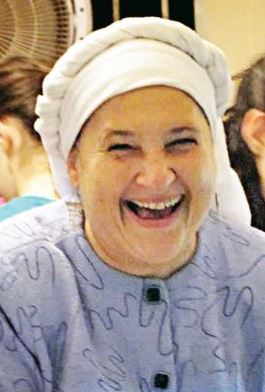
In 2016, a hefty new Artscroll biography was published whose cover stands out in the sefarim store among images of bearded rabbis. Emunah with Love and Chicken Soup is the story of the late Rebbetzin Henny Machlis, whose Jerusalem home was legendary for welcoming hundreds of guests each Shabbos, providing them with home-cooked meals as well as a deeper nourishment they may not have known they needed. The book is written by Sara Yoheved Rigler, author of Holy Woman and a frequent contributor to Aish.com. Rigler writes with a unique appreciation for holy Jewish women. While her books would probably not pass the academic smell test, she is able to convey the passion and fire of a great individual in her writing in a way that tends to escape her more polished peers. Henny Machlis as well as her husband Rabbi Mordechai Machlis were truly great individuals who stretched themselves beyond their individual egos to leave a remarkable legacy. Rigler writes in the book that when Henny was younger she used to say that she wanted to have 20 children and introduce Judaism to the entire world. She ended up having 14 children (with nine c-sections!) and inspired tens of thousands of Jews and non-Jews alike. She was, as the book jacket describes, “a virtuoso in chesed,” someone for whom the normal boundaries separating oneself from others is effaced.

For the full review, in the Jewish Link of NJ’s Literary Link, click here.

Whose Museum of the Bible Is It?

In November 2017, the newly constructed Museum of the Bible opened in Washington, DC. It is reportedly the most technologically advanced museum ever built in the United States, and it is the largest privately funded museum in the country. The majority of the financial backing for the museum, which is free to the public, comes from the Oklahoma-based Green family, founder of the Hobby Lobby chain of craft stores and champion of Christian causes. Despite its backers’ beliefs, the Museum of the Bible goes out of its way to make religious Jews comfortable. To take one of many examples, a visitor must strain his or her eyes in order to see the term “Old Testament” used anywhere in the museum. Instead, it is almost always the “Hebrew Bible” or even the “Jewish Bible”—a signal to Jews that their Torah has not been superseded by Christianity. All of that said, the Museum of the Bible is not a Jewish museum, nor should it be mistaken for one. Nevertheless, Jewish visitors who remain aware of the limitations inherent in such an enterprise have much to gain from the Museum of the Bible. Indeed, somewhat paradoxically, a visit to the museum provides an opportunity even for literate Jews to learn something about the impact of our central sacred texts on the wider world and can have a profound impact on our sense of Jewish pride and religious mission.

Please see the Summer 2018 Issue of Jewish Action Magazine for my review of the new Museum of the Bible and its relevance for the Jewish visitor.

Welcome to the Jungle: Shababniks Meet the Spotlight

This article appeared yesterday on The Lehrhaus. The first episode of Shababnikim may be viewed with subtitles here.

shabab2-1519156338

Sarah Rindner

Israel has produced several fabulous television series in recent years, perhaps especially those which depict fictional lives of religious Jews. These include the iconic Srugim, which tracks the Friends-like relationships between a group of single friends navigating the South Jerusalem “national religious” dating scene. The entertaining, if somewhat melodramatic, Kathmandu follows the legitimately exciting lives of a Chabad couple living and working in Nepal. Shtisel, both hysterically funny and understated, set a new bar for subtlety and depth in exploring the dynamics of a rather dysfunctional but wholly endearing hasidic-haredi family in Jerusalem.

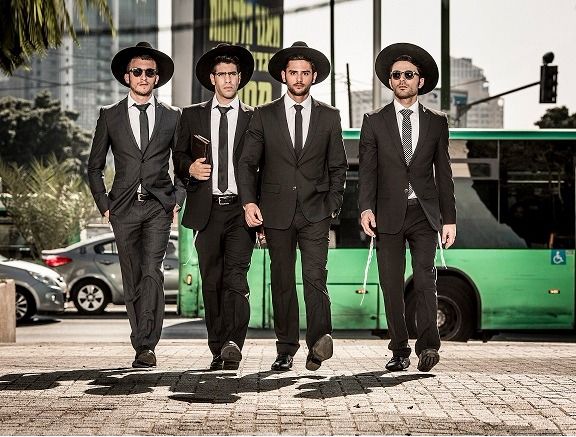
Shababnikim, one of the latest additions to the mix, is a slickly produced and fast-paced series that chronicles the adventures, both external and internal, of four twenty-something denizens of an elite haredi yeshiva in Jerusalem. The aesthetics, four studs sauntering off to some irrelevant destination with the backdrop of a throbbing rock soundtrack, recalls the HBO series Entourage. The substance spans the gamut from romantic comedy to profound observations about Judaism, the relationship between the religious and secular worlds, and what it means to be a man. In other words, it’s the kind of series that could only exist in present-day Israel, and it’s the invention of a talented religious graduate of the Ma’aleh film school named Eliran Malka.

For the full review see here