The Riddler

“My teacher used to say that we must learn to stay with a difficult question for forty years. Not to let up, and not to despair. Then there is a chance that we will reach the truth.”

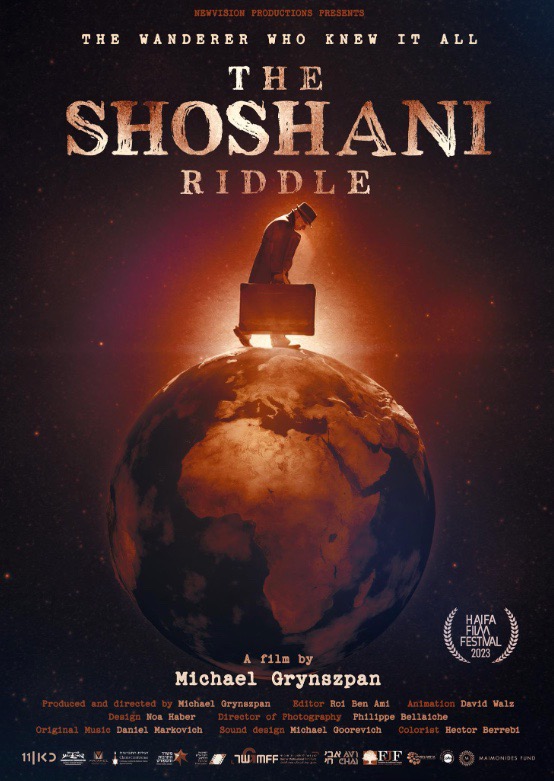
Amid the chaos and trauma of October 7, 2023, one of the innumerable cultural events deferred was the release of a unique documentary about the elusive Monsieur Shoshani. Shoshani’s mysterious persona, brilliance, and iconoclastic disposition have been the stuff of legend since he emerged from Europe after the Holocaust (he is depicted on the movie poster as a hunched-over figure carrying a suitcase). Shoshani was purportedly a master of Jewish tradition, Western philosophy, mathematics, science, and as many as thirty languages. He taught Torah everywhere he went—France, Morocco, Israel, and Uruguay—though what, exactly, he taught and where he came from remain a mystery. His students ranged from scholars and physicists to farmers and Holocaust orphans.

After he met Shoshani, the great French Jewish philosopher Emmanuel Levinas famously said, “I cannot tell what he knows; all I can say is that all that I know, he knows.” His gravestone in Montevideo, Uruguay, reportedly paid for by Elie Wiesel, reads, “His birth and life were sealed in a riddle.”

Although Shoshani’s life remains shrouded in mystery, the curtain seems to be drawing back, at least a bit.In 2021, the National Library of Israel announced Shoshani, whom Levinas once called “the Oral Torah in his entirety,” had left dozens of notebooks behind. Some of these cryptic notes…had been preserved in a secretive trust by four of his students since 1969. Another trove was donated to the National Library by Professor Shalom Rosenberg, an Argentinian-born scholar of Jewish thought at Hebrew University who became close with Shoshani toward the end of his life. For the last fifteen years, French Israeli director Michael Grynszpan has toiled and puzzled over the notebooks and the life of their author. His result is The Shoshani Riddle, which chronicles Grynszpan’s hunt for Shoshani and his attempts to piece together the master’s life story.

For the full review of this wonderful film, please the new Winter issue of Jewish Review of Books.

A Covenant of Earth and Sky

In the early hours of June 13 my family and I, like all Israelis, were awakened by the shrill sound of a phone alert. Israel had preemptively attacked Iran’s nuclear facilities. Momentous news, but I promptly put my pillow over my head and went back to sleep. Only when we woke up again later that morning did we realize that something historic had occurred. We also understood that a challenging period lay ahead.

We had only recently moved into a new home and, despite Houthis sporadically firing missiles in our direction, we had grown lax about running to our safe room, what Israelis call a mamad. Ours was filled with dust and leftover construction material. But on the day of the phone alerts—once we’d grasped the gravity of what was happening—we got to work. We spread a plastic mat over the floor, brought in a spare mattress, and set up a pack-and-play crib. The missile fire from Iran began in earnest that evening.

As the days wore on, we adjusted to the confines of this small space where emotions vacillated between fear, comfort from the presence of those we loved, and occasional irritation by those very same people. One mattress turned into four—each of our seven children laid claim to their own little spot. The more time we spent in our safe room, sometimes joined by friends or near strangers who needed a place to shelter, the more we acclimated ourselves to its deprivations and, occasionally, to its surreal benefits. Sociologists talk about the “third place,” which is an additional living space beyond home or work, like a synagogue, for example. These places expose us to people, ideas, and experiences beyond our immediate family and daily routines. During Israel’s twelve-day war with Iran our safe rooms also became a third place, introducing a new mentality and way of being that removed us from our day-to-day lives.

Read the full article, just recently posted online, from the Fall issue of Lubavitch International Magazine.

Kuma: The Story of the Jewish People

The Bible Lands Museum in Jerusalem is known for its collection of Near Eastern antiquities from the Biblical period. Yet amidst its galleries stands a startling cultural artifact of far more recent origin.

Kuma—meaning “Rise”—is a nearly ten-foot-long scroll depicting a dense, vivid, intellectually rich, and aesthetically stunning account of Jewish history. Its full title, Kuma, Mei Afatzim ve-Kankantum,” refers to the materials used to prepare ink for Torah scrolls and other sacred texts. Evoking an unfurled Torah scroll, Kuma is the high-school senior project of a brilliant young yeshiva student, artist and poet named Eitan Rosenzweig הי”ד. Staff Sgt. Rosenzweig, an Alon Shvut native and student in the Yerucham Yeshivat Hesder, served in the Givati brigade and was killed in Gaza in November 2023, at the age of 21.

Kuma weaves together Jungian theories of the unconscious, the mythologist Joseph Campbell’s concept of the heroic journey, and imagery drawn from Western art and Jewish history—some of which appear elsewhere in the Bible Lands Museum. Kuma also incorporates literary allusions to the Bible, Talmud, modern Hebrew literature, Eastern and Western general philosophy, and more. It is a work of art that one must study rather than merely observe.

The full essay can be read at Tradition Online.

Children of the Book

“Books, even works of genius, are not incandescent orbs that exist independently in some kind of ether. For books to have enduring value, they must be read by people. For those readers to exist, they must be born and raised.”

Was a pleasure to review Ilana Kurshan’s fantastic new book for the Summer issue of Tradition, now available online.

Three Ways in Which Operation Rising Lion is a Lot Like Narnia

Note: I recently started a Substack so this post appears both there and here on WordPress. I’m going to try to keep both platforms updated so please feel free to choose the one which you prefer and unsubscribe or turn off notifications from the second so you don’t see my updates twice.

From the deluge of fascinating news from Israel’s remarkably successful “Rising Lion” operation against the Iranian regime, one interesting tidbit relates to children’s literature, of all things. According to the Israeli newspaper Yediot Ahronot, IDF intelligence began to assemble a list of the leading scientists driving the Iranian nuclear weapon program in 2022, and their research efforts were given the secret code name “Narnia.” At 3:00 am on June 13, when the Israeli Air Force swiftly eliminated 10 of these scientists, along with striking the Natanz nuclear plant and other military targets, the operation was officially dubbed “Operation Narnia.”

a blue book with a picture of a man walking through the woods
Photo by Tim Alex on Unsplash

In describing the operation, the Jerusalem Post writes that name “reflects the operation’s improbable nature, like something out of a fantasy tale rather than a real-world event.” Indeed, it was hard to believe that the same country that suffered such devastating losses on October 7 due to intelligence failures could execute such a meticulously planned and perfectly executed military offensive. Yet there are many fantasy tales, and the name Narnia is much more than a metonym for all that is improbable or unlikely to occur. Could it be that somewhere in Israeli intelligence circles there is a fantasy geek who specifically chose this code name to evoke a specific connection with the literary world of Narnia? Perhaps. In the meantime, Israeli schools and all other activities are cancelled and we are stuck at home. So I find myself reading Narnia with some of my kids, perhaps for the third time. In our bleary-eyed and underslept state thanks to 2:00 am trips to the safe room, these are the connections that seem to emerge:

1- Narnia is Israel and Calormen is Iran

man sitting beside river painting
Photo by British Library on Unsplash

While some readers of Narnia stop at the famous first book, The Lion the Witch and the Wardrobe, the later books in Lewis’ series introduce us to other lands and cultures which surround Narnia and in doing so offer pointed parallels to the geopolitics of Lewis’ own time. One of these countries is a Middle-Eastern type of desert nation called Calormen, characterized by a hodgepodge of Persian and Arabian motifs: “The Calormenes have dark faces and long beards. They wear flowing robes and orange-coloured turbans, and they are a wise, wealthy, courteous, cruel and ancient people”. Calormenes have many admirable qualities, like a rich culture of storytelling to which Lewis’ narrator is obviously sympathetic, and splendid landscaping and food. Yet while it may outshine Narnia on the material front, it lacks basic freedoms which prevents the full flourishing of its people. Everyone in the society understands their place in a rigid hierarchical structure, and all are required to slavishly try to curry favor with their vainglorious leader the Tisroc. In the capital city Tashbaan, “there is only one traffic regulation, which is that everyone who is less important has to get out of the way for everyone who is more important; unless you want a cut from a whip or punch from the butt end of a spear.” When a poor boy raised in Calormen is mistakenly identified by the Narnians as a member of their party he is smitten with these joyful, bright-eyed people who seem to live without paranoia and insecurity. Yet he can’t help but lie about his identity, as the narrator explains: “he had, you see, no idea of how noble and free-born people behave.”

The individuals we meet in Calormen aren’t all that bad, but centuries reared in a culture where deception and obsequiousness, rather than hard work and talent, are needed to get ahead certainly takes its toll on the moral character of the society. Lewis contrasts this with Narnia, where freedom is cherished, and consequently people develop virtues like courage, honesty and kindness.

Now Narnia may be intended as a stand-in for Lewis’s own England, but in the spirit of William Blake’s “Till we have built Jerusalem / In England’s green & pleasant Land,” I believe there are some parallels with Israel too. While Israel is certainly influenced by its Middle-Eastern surroundings, it is an informal culture where people by and large have the freedom to speak their mind and determine their own destinies. Unlike nearly every other great military power in history, it never set its sight on building empire and controlling other nations. Like Narnia, it is content with merely perpetuating its own way of life within its own borders. Thus it remains a mystery why countries like Iran seek its destruction so vehemently and for so long. If it remains baffling to us, King Edmund of Narnia does offer a kind of answer. In trying to make sense of the curious urge in Calormen to wage war on Narnia, Edmund observes: “We are a little land. And little lands on the borders of a great empire were always hateful to the lords of the great empire. He longs to blot them out, gobble them up” (A Horse and His Boy, p. 68).

Israel right now is doing a lot to make Iran angry, but this anger predates airstrikes in Tehran by decades, and is rooted in the same lust for empire that C.S. Lewis observed during his own dark times. Our response must be the same as it is in the world of Narnia, to push back against Islamic expansionism through military defense, and also to cherish all of the qualities that make our culture unique and worth preserving.

2- Rising Lion

brown lion
Photo by Mika Brandt on Unsplash

When Narnians go into battle, the symbol that is displayed on their flags and shields is a lion. The lion of course is a reference to Aslan, the spiritual icon of Narnia and a Christological metaphor. The reason Jesus is associated with a lion is rooted in the Bible of course, “the lion of Judah,” and in Judaism lions are associated with kingship and sovereignty. Thus it’s also not surprising that “rising lion” is the name and symbol of the current Israeli campaign. The name “Rising Lion,” which is a translation of “Am KiLavi Yakum,” derives from the Prophet Balaam’s blessings of the People of Israel in the book of Numbers: “Behold, a people that rises like a lioness and raises itself like a lion. It does not lie down until it eats its prey and drinks the blood of the slain.” (Num. 23:24) Some unhinged Israel haters have pointed to this verse as proof of Israeli thirst for atrocities. The verse is obviously meant to be symbolic, but the truth is, lions are fearsome creatures who devour their prey. And we have learned over the past twenty months that, in order to defeat evil and restore peace and order to the world, we must be stronger and fiercer than our enemies. This does not always look nice. But that does not mean that it is not a moral posture. Here too, the Narnian parallel can be illuminating. When Susan first learns about the great lion of Narnia she is understandably scared: “Is he—quite safe?” I shall feel rather nervous about meeting a lion.” Mr. Beaver responds: “Safe? . . . Who said anything about safe? Course he isn’t safe. But he’s good. He’s the King I tell you” (The Lion, the Witch and the Wardrobe, p. 80.)

The current IDF campaign in Iran, and even more so, the extended war against Hamas in Gaza, contains visuals that are terrible and painful to behold. But as Lewis’s narrator reminds us, “People who have not been in Narnia sometimes think that a thing cannot be good and terrible at the same time.” What lions symbolize, in the Bible, in the world of fantasy and right now, is the way in which ferocity and justice must, in certain circumstances, work hand in hand. Critics of Israel’s campaign who are supposedly driven by religious pacifism may also take note another verse in Balaam’s litany of blessings directed at the Jewish people: He crouches and lies like a lion and like a lioness; who will dare rouse him? Those who bless you shall be blessed, and those who curse you shall be cursed” (Num, 24:9)

3-Pacifism is Not a Virtue

This brings me to a final point about some of the well-meaning critics, many of them Christian, of Israel’s courageous campaign against evil and America’s supporting role in that effort. While many fairy tales end with a vague “happily ever after,” Lewis takes care to remind us at the end of the Lion, the King and the Wardrobe how the four Pevensie children, now turned kings and queens, spend their days making good laws, keeping the peace, and waging honorable battles in defense of their beloved Narnia. The first progressive in the series is their annoying cousin Eustace Clarence Scrubb, who surfaces in the Voyage of the Dawn Treader when he accidentally gets sucked into a grand voyage with Edmund and Lucy through a painting. Eustace is just awful, a bully and a stick-in-the-mud who has no use for the grand adventures of the sort for which the Pevensie children live. Eustace’s coddled upbringing has given him few opportunities to appreciate the real dangers that exist in the world, although this thankfully changes when he is turned into a dragon. The privilege of distance from danger allows him the freedom to antagonize everyone around him and avoid retribution by declaring “I’m a pacifist. I don’t believe in fighting.”

Lewis was, indeed, critical of those who could never distinguish between a just war and pointless bloodbath. He viewed this problem as similar to an inability to distinguish good from evil. As early as 1940, Lewis delivered a lecture to the pacifist society at Oxford University entitled “Why I am Not a Pacifist,” in which he articulates, from various angles, a justification for wars that need to be fought in order to protect higher values. This does not make the realities of war any less terrible. Yet only by recognizing human necessity can one begin to improve things.

Lewis says:

To avert or postpone one particular war by wise policy, or to render one particular campaign shorter by strength and skill or less terrible by mercy to the conquered and the civilians is more useful than all the proposals for universal peace that have ever been made; just as the dentist who can stop one toothache has deserved better of humanity than all the men who think they have some scheme for producing a perfectly healthy race.

To try to fight a better war, or a shorter or more precise war in which less civilians are killed, is a noble virtue. To avoid war altogether, in all circumstances, is simply a pipe dream that, as Lewis says in the same lecture, will result in “[handing] over the state which does tolerate Pacifists to its totalitarian neighbour who does not.”

Lewis’ analysis applies perfectly to Israel’s situation in its seven front war from Gaza to Iran. The war we fight now is intended to prevent future wars, to invite peace and prosperity to this beleaguered region as well as to other parts of the world. We are not waiting for a lion to save us from “beyond the sea.” We are an “am shel ariyot,” a nation of lions, fighting our hardest on behalf of our highest values. May the current conflict and this larger war come to a speedy, victorious and decisive conclusion.

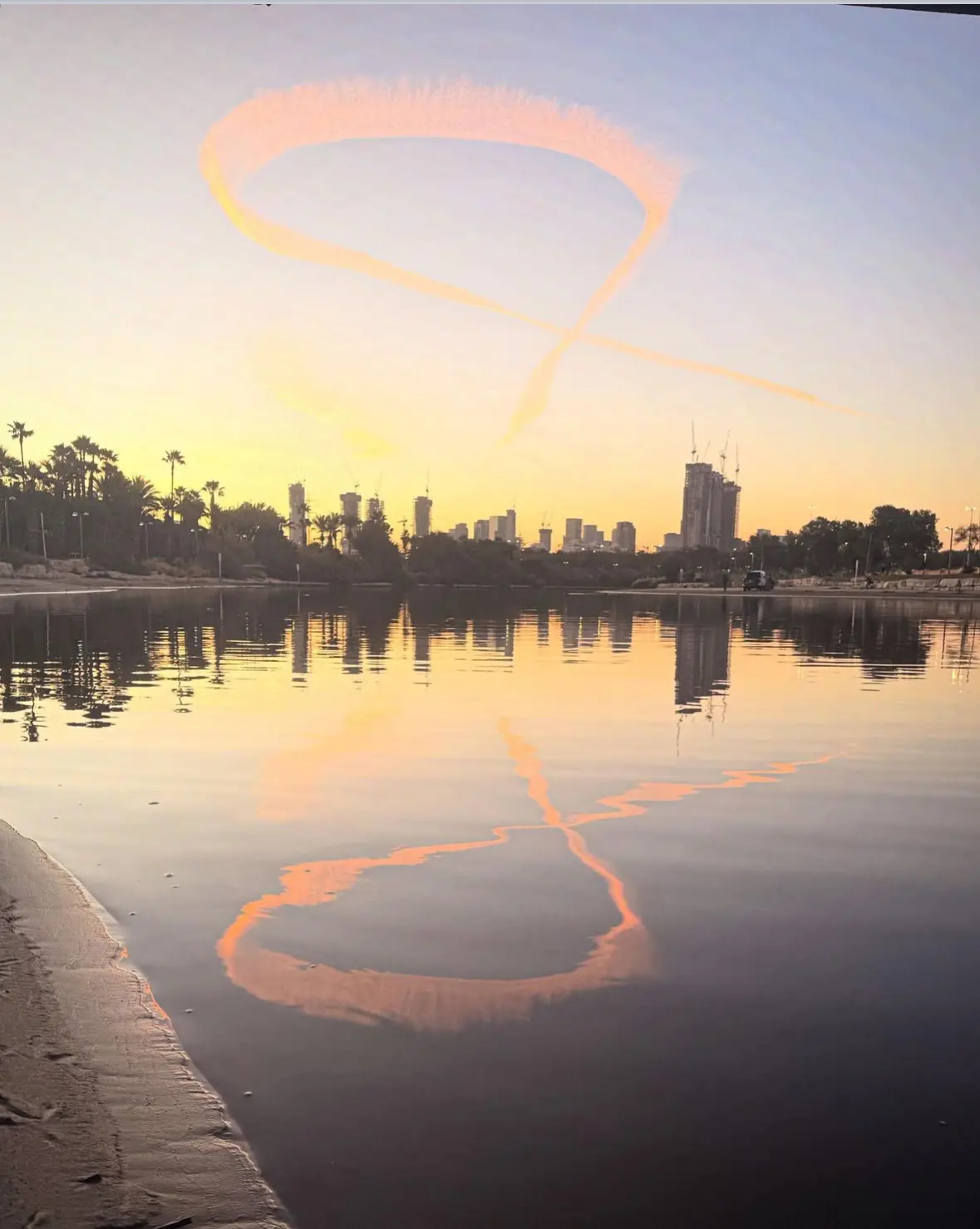
Ribbons of Hope

Last week when President Trump announced his intention to clean out and rebuild the Gaza Strip, I don’t think I was alone in feeling something I had not felt in a long time. It was not the elation of giving it to ones enemies, or the smug satisfaction of political validation.  It was a rather fragile feeling, somewhat tentative, one might even say naive. Throughout the war we have experienced crushing blows but also astounding, miraculous, successes. Yet  in these victories there is often a cyclical dynamic: we conquer territory only to withdraw weeks later, we kill terrorists only for their ranks to be replenished by a seemingly infinite supply of hateful young jihadists. Even our genuine exhilaration at the return of a few of our hostages is marred by our fear of what’s to come from from the murderous and unrepentant terrorists who are being released in turn. As always, we trust in God and our military and wish for the best, but common sense tells us that, in good measure, the problems we face today aren’t going anyway time soon. 

For real hope to blossom, we need to understand that change is on the horizon. Trump’s proposal, whether or not its likely to materialize, offers a rare vision that could potentially break the cycle in which we find ourselves. I was therefore surprised to notice a few American Rabbis and “Jewish professionals” pontificating on the matter with critical accusations of ethnic cleansing and the like. On second thought I suppose it’s not that surprising. Only someone who is not particularly starved for hope could look such a gift horse in the mouth. If Trump’s Gaza proposal leaves you ethically outraged, or even indifferent, this  simply demonstrates your own removal from the pit of despair in which Israelis find ourselves since October 7th. In the days following his announcement, I have not spoken to any Israeli, on the right or the left, who does not feel just a little bit hopeful, or at least tickled, that a world leader finally has the courage to propose a way out of our current morass. 

I don’t know if it is providence or simply an all-knowing algorithm, but last week a new song popped into my Spotify playlist called “Ribbon of Hope,” “Chut shel Tikvah,” written by the popular Israeli singer-songwriter Aaron Razel and his wife Efrat. The song was actually composed about a year ago, around the time of the first hostage release, when Razel and his wife were enjoying a beautiful day together on the Tel Aviv boardwalk. I understand those kinds of days as I’ve experienced many of them myself since October 7th. A lovely day when you have the chance to appreciate the beauty and wonder of daily life in Israel, with the sickening knowledge that all around us families are grieving, soldiers are fighting for their lives (and ours) on the battlefield and that dozens of our brethren are wasting away in the depths of Hamas torture dens. Yet this day was different, as Razel sings, there was a sense that something monumental is about to change. 

The song has a kind of 1960s, folksy feel, amplified by harmonica interludes by the famous Israeli musician Ehud Banai. Although it owes a debt to peace anthems from the past, there’s a difference here, a respect for the necessity of war and also, I think, a kind of underlying ambiguity that is not necessarily apparent on first listen. 

Two allusions here may be familiar to listeners. One is the “ribbon of hope,” which likely references the Book of Joshua’s story of the harlot Rachav, who saves the Israelite spies in Jericho and hangs a red string from her window. Interestingly, in Joshua the Hebrew word tikvah means cord – but hints at the hope that Rachav and her family can ultimately be saved from the wicked society on whose edge they dwell.   The ribbon in the song also is reminiscent of the yellow ribbon that has morphed into the ubiquitous symbol of the Israeli hostages imprisoned by Hamas. 

The phrase “captured child,” is a translation of “tinok shenishba,” a Rabbinic term that refers to a Jew who was kidnapped by gentiles as a child and as a result cannot be Halakhically held responsible for his lack of Jewish observance. It could be that the Razels chose “tinok shenishba,” just for its associations with innocence and captivity, though I wonder if something else is being suggested here. The term “captured child” is used in Rabbinic literature in reference to sin, it allows us to relieve responsibility from adults who simply don’t know better.  

Perhaps some of the implication here is that a certain kind of hope is indeed naive, and perhaps even wrong. We hope and pray for the safe release of our hostages, even if we know that under the current parameters it comes at a cost that is unforgivable. We dream of an end to the war, even if we know that ending it prematurely means passing on the baton to the next generation, that is to our own children and grandchildren. Yellow ribbons have become mixed symbols in our divisive national context. We all long for the return of our hostages alive and in good health. But the cars that sport yellow ribbons often have washed out anti-Bibi bumper stickers as well. Hostage Square is just around the corner from Kaplan Street, and despite many many fine efforts to steer things differently, the Hostages and Missing Families Forum is hopelessly politicized and pointed often in the precise direction of its potential allies. 

Finding shared sources of hope and consolation in this environment can be challenging. Which perhaps is why the Razels chose to newly rededicate the song to Agam Berger, a 19 year old observation soldier and gifted violinist who was released in a recent prisoner exchange. Reports about Agam have captivated the Israeli public since they filtered out after the first hostage deal, how she refused to eat unkosher meat or clean or cook for her captors on Shabbat, how she lovingly braided the hair of female hostages before they were released, even though she was forced to remain. Her first message to the world upon her release (in exchange for 50 craven terrorists) was “I chose the path of faith and in the path of faith I returned.” 

Amidst all the protests, uproar at the Knesset, burning trashcans on the Ayalon, we are presented with the image of one brave young woman clinging to her faith, using it to hold up herself and others, and in doing so uplifting her nation as well. This also is a version of hope because it presents us with another path. If the hostage crisis has been used as yet another wedge to pointlessly drive us apart, perhaps the purity and heroism of these individuals can also help us find a way to move forward together.  

The new addition of the song includes an added stanza that honors Agam. The line “who is this coming up from the desert” is a quote from the Song of Songs, and can just as easily be applied to the Jewish people leaving their Egyptian captivity. In the song it also refers to Agam:

Both Agam the person and also the sparkling water imagery with which she is associated,  adds the presence of something refreshing and new. A new shot at national unity, at spiritual consciousness, and for her and her family, a new chance at life – it is not a coincidence that the Hebrew words mikvah and tikvah are related. And now, “on the horizon/ are days of hope/the waves whisper their faith.” 

Personally I don’t know anything about what the coming years, months, or even days will bring. None of us do. But we can be grateful for the mere chance to  be a teeny bit closer to breaking away from a rotten paradigm that has brought so much bloodshed and destruction – toward something new, “rising up from the desert.” Maybe things won’t exactly pan out in the way that the American president, and all of us, dream (there may also be some differences there). As for me, I’m still going to cling to ribbons of hope. 

Between Heroism and Grief: One Day in October

It was an honor to review Koren Press’s outstanding new book One Day in October for the Jerusalem Post Magazine this past week. While the book is not necessarily “literary” in nature, it is brilliantly written and edited, and moved me in a way that few books have. This piece is actually an abbreviated version of a longer review essay that will hopefully appear in the Jerusalem Report in the coming weeks. Grateful to be part of this “עם של אריות,” “nation of lions,” whose incredible bravery continues to exhibit itself each and every day.

The Muses of October 7

“Some may find art galleries irrelevant amidst the geopolitical challenges Israel now faces, the profound physical and emotional injuries faced by its citizens, our ongoing fear for the hostages and for the soldiers fighting in Gaza and the north. But the art of October 7, like the phenomenal music that has emerged in its wake, is urgent and searing. It provides a visual prism through which we can try to understand our times, to memorialize those who were murdered and to scream over its injustice. ״

Walk the streets of Israel post-October 7 and one experiences a country transformed. This transformation manifests in many aspects of our lives: our political allegiances, our sense of certainty and security, and our attitudes toward one another. But our streets have also literally, physically, been transformed. Cars are bedecked in Israeli flags and bumper stickers that commemorate fallen loved ones and friends. The now iconic red-and-black hostage posters line storefronts and traffic poles (in Israel they don’t get ripped down). Army green is everywhere—at times every fifth person walking down the street seems to be in uniform and carrying a large weapon. And street art and graffiti that focuses on the hostages or the ongoing military campaign is ubiquitous. Grassroots memorials take various forms—from yizkor candles to red poppies (the classic symbol of military loss is also a common wildflower in the south of Israel) to countless other manifestations. This spontaneous public art is intense and concentrated in certain places, such as Hostage Square in Tel Aviv and the Nova massacre memorial in Re’im. But it also can be found on random street corners and benches, in malls or in doctor’s offices. Art is everywhere, a direct outcome of a nation that is actively grieving horrific events and continuing crises. 

Ziva Jelin, Panorama: Pavement and Mud, 2018, acrylic and tar on canvas. Photo credit: Ron Plitnitzki.

A new exhibit, recently opened at the ANU Museum of the Jewish People in Tel Aviv, seeks to explore this creative phenomenon in real time. The exhibit is simply titled “October 7.” It begins by considering the notion that art is irrelevant at the height of wartime, as expressed by the proverb “When the cannons are heard, the muses are silent.” Orit Shaham Gover, the chief curator of ANU, proposes this alternative: “As the cannons are heard, the voices of the muses are emerging all the more clearly from deep down in the throat.”

A full review of this moving exhibit can be read in Moment Magazine.

A Religious Musical in Secular Tel Aviv

Traditional lines between the secular and religious populations are fading, particularly in the realms of music and art.

I’d like to belatedly share excerpts from an article that appeared a few months back in Mosaic Magazine. The growing popularity of religious singers among secular audiences here in Israel has been noted elsewhere. One hopes that this rising trend can serve to combat some of the tragic division we see in Israeli society right now.

“This past Sukkot, a crowd of about 500 children, parents, and grandparents gathered in the Recanati Theater in the Tel Aviv Museum of Art. The audience was made up of affluent and mostly secular residents of north Tel Aviv and its suburbs—stylishly dressed, sipping lattes and organic juice sold at the trendy coffee shop nearby. To an outside observer, the scene would be almost indistinguishable from a family-oriented play or concert in Park Slope, Brooklyn. The content, however, was distinctly Israeli: a jukebox musical called Aluf ha-Olam (literally, “Champion of the World”), based on the songs of the religious Zionist singer Hanan Ben-Ari, written and performed by Israel’s most prestigious children’s dramatic company, the Orna Porat Theater. Tickets for Aluf ha-Olam are in high demand and sell out quickly, so I booked seats for me and my children several months in advance. One could sense from the anticipation in the theater that many others had done the same.

Hanan Ben-Ari is one of Israel’s best-known musical performers, albeit without the international break-through appeal of peers like the religious music sensation Ishai Ribo. His strength is in his songwriting; catchy tunes, drawn from eclectic influences, and coherent, powerful lyrics that comment on personal, often spiritual, struggles…

…Ben-Ari’s penchant for infusing lyrics about universal topics with the language of the synagogue and yeshiva tends to obscure the boundaries between sacred and secular idioms. His 1980s-inspired feel-good ballad “Dream like Joseph,” for instance, argues that every story in the Bible reflects some basic human experience: “everyone leaves his father’s home/ everyone nearly sacrifices his child/ deep within is a little Sodom/ that he wishes to erase already/ and angels will rescue him…”

…Thus the prospect of translating Hanan Ben-Ari’s music into an Israeli secular vernacular, as Aluf ha-Olam seeks to do, is daunting, and perplexing. It raises the question of whether Ben-Ari’s biblicism and Jewish allusions are charming embellishments or so central to his work that they cannot be disentangled from it. But merely to ask this question is to acknowledge that Israeli society’s shared cultural touchstones appear to be growing more and more Jewish, and traditional lines between the secular and religious populations are fading, particularly in the realms of music and art…”

For the full article see here.

Shababnikim Season Two: Welcome to Rehavia

“On a bright spring day in a swanky Tel Aviv neighborhood, a handsome man sporting a trim beard and a perfectly perched black yarmulke alights from an expensive SUV. He kisses his beautiful and modestly clad wife, as three smartly dressed yeshiva boys across the street watch, swoon, and dream of similar lives for themselves. “A yeshiva boy who married well?” one suggests. “No, no—he earned it for himself!” his friend explains: After being expelled from a prestigious yeshiva for owning a smartphone, he flew to Rome, camped out for a week on the doorstep of Borsalino headquarters, and earned the right to open the first official Israeli chain of stores for the high-end Italian hatmaker. Although he is too busy earning money to study in yeshiva full time, he still dedicates time every day to study Talmud. “The modern haredi,” the boys say, sighing. “He enjoys both worlds. He has this and yet he also has that!” As they wave to him crossing the street, a large truck comes out of nowhere and plows into him. And so the show’s question remains: Is it really possible to have both this and that?”

Please check out the absolutely wonderful latest issue of Jewish Review of Books for a review of the second season of Shababnikim, a fabulous Israel television series with much more depth than initially meets the eye.