Children of the Book

“Books, even works of genius, are not incandescent orbs that exist independently in some kind of ether. For books to have enduring value, they must be read by people. For those readers to exist, they must be born and raised.”

Was a pleasure to review Ilana Kurshan’s fantastic new book for the Summer issue of Tradition, now available online.

Between Heroism and Grief: One Day in October

It was an honor to review Koren Press’s outstanding new book One Day in October for the Jerusalem Post Magazine this past week. While the book is not necessarily “literary” in nature, it is brilliantly written and edited, and moved me in a way that few books have. This piece is actually an abbreviated version of a longer review essay that will hopefully appear in the Jerusalem Report in the coming weeks. Grateful to be part of this “עם של אריות,” “nation of lions,” whose incredible bravery continues to exhibit itself each and every day.

A New Read on Female Modesty

It was an honor to review Rabbi Anthony Manning and Bracha Poliakoff’s groundbreaking new book for the wonderful Winter issue of Tradition Journal. This review was written before October 7 and before the world as we know it changed. In truth discussions of dress codes and hair coverings feel very distant right now, as we fight a war for our survival and we mourn the loss of precious soldiers nearly every day. Yet it’s interesting to note that the primary Biblical source for Tzniut actually comes from the battlefield, from the requirement that Jewish soldiers maintain a sense of holiness and dignity in their encampment. This requirement filters through to the soldiers of Tzahal today, where their remarkable integrity, spirit and faith distinguish them from every other army in the world. Please enjoy the review which has been released from the paywall courtesy of Tradition Journal.

Review: My Quarrel With Hersh Rasseyner by Chaim Grade

Translated by Ruth Wisse

Published by The Tikvah Fund and Toby Press

The year is 1948. Two Holocaust survivors run into each other on a Paris subway. Though each had assumed the other was killed in the Holocaust, they waste little time exchanging questions about wartime experiences or polite inquiries about the well-being of family and friends. Instead, the two fall back into an argument they had begun many years before, in the period preceding World War II. Both are graduates of the Novardok yeshiva in Lithuania, and their argument is intellectual, philosophical, and also deeply personal. They debate the question of how a Jew should relate to the world around them. One believes the world outside of Judaism is rich with insight and enlightenment. The other maintains that the Torah is the only source of meaning in this life, and all other endeavors amount to nothing but vanity and self-destruction. 

For the full review of this wonderful new translation of a classic Yiddish story see the excellent new issue of Lubavitch International Magazine.

Living Antiquities: Ozick, Great Books & Judaism

A recent conversation over at Tradition Magazine discusses the potential relationship (or lack thereof) between “Great Books” and Judaism. I weighed in with the help of one particularly great book, Antiquities by Cynthia Ozick. Please read the full essay here.

An excerpt: “There are many wonderful cases to be made for the contributions of great books to our culture, our civilization, and to ourselves. But on a common-sense level, Menand is right. While people who love literature (myself included) can make a compelling case for why these texts enrich our lives, we cannot generalize that those who read great literature are on the whole better people than those who are interested in other matters. Countless well-known authors and literature scholars have been involved in every kind of sordid affair imaginable. Indeed, whenever a new anti-Semitic tinged crusade against the Jewish State pops up, literature departments are inevitably leading the charge. Menand writes that “knowledge is a tool, not a state of being.” To me there is no doubt that the experience of reading Cervantes or Jane Austen can generate profound insights into the complexity of human experience, and morally sensitive writers like George Eliot or Leo Tolstoy create a powerful case for virtue. Yet clearly something else is necessary in order to lay the foundations of a moral life in practice.”

For more on that “something else,” see my latest in Tradition.

Covid-19 and J.K. Rowling’s The Ickabog

At the height of the coronavirus pandemic last April, when celebrities around the world were lecturing us via tweet to stay home and wear a mask, British novelist J. K. Rowling took a different approach. As kids were forced to forego school and interactions with friends, she published a new children’s book and released it in free installments for families stuck at home. The novel, The Ickabog, was published in full this past Thanksgiving. Proceeds from sales of the book are donated to communities hurt most by COVID-19.

Rowling has said that the Ickabog story first came to her years ago, when her own children were young. She wrote the book during the period in which she wrote the Harry Potter books, and claims to have made no serious modifications since that time. Yet intentionally or not, The Ickabog may be the most serious literary indictment of the mass response to the COVID-19 epidemic published to date.

The cover of JK Rowling’s The Ickabog. This may be a stretch but note the corona (Latin: crown) artfully woven into the book logo.

I bought the book as a gift for my Harry Potter-loving 9-year-old, and first picked it up on the Sabbath after Hannukah. My family had just returned from Jerusalem, where the lack of tourists and the still-considerable virus restrictions cast a pallor on this normally magical time of year. After months of closures, the street vendors of Jaffa and Ben Yehudah streets finally had their Judaica and souvenirs proudly on display, albeit with few takers. Seemingly half of the usually bustling restaurants were temporarily shuttered or closed for good. I wasn’t in the mood to read more of the endless news about the pandemic, so I turned to my son’s Rowling book looking for a light fantasy escape.

Read the full essay at First Things

When Heidi Met Shimen, or, Why Real Religion Endures

A review of Judaism Straight up by Moshe Koppel

Several years ago, a blog called Judaism Without Apologies began to circulate on social media. The blog began by juxtaposing two Jewish characters’ lives and ideals: Shimen, a Gerer Hasid of sorts and Holocaust survivor living on the Upper West Side of Manhattan, and Heidi, a cosmopolitan Princeton graduate who thinks of herself as a citizen of the world.

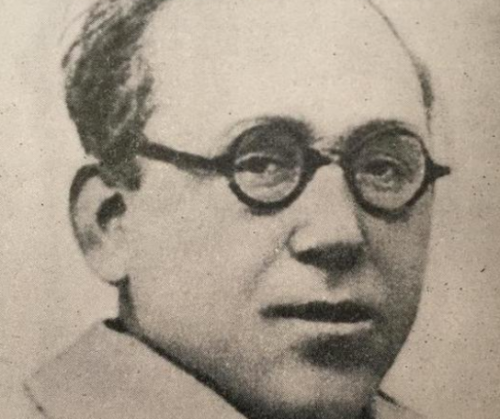
A photograph by George Kalinsky of my own Polish Holocaust survivor grandfather at the Siyum HaShas in 1990. I imagine Shimen having a similar intense, independent-minded look.


The series was narrated by the American Israeli computer scientist Moshe Koppel, who had attended Shimen’s Gerer shtiebel in his youth. After obtaining a PhD in mathematics, Koppel spent a year at Prince- ton’s Institute for Advanced Study, where he met the original Heidi, the first of many he would encounter in the years to come. Koppel’s blog may have been rooted in comic sociology, but it quickly morphed into a serious discussion of moral philosophy, game theory, cultural anthropology, the nature of language, and ultimately an argument about the future of Judaism itself. Despite its rather niche appeal, the blog’s unique fusion of a no-holds-barred attitude with serious erudition attracted some diehard fans. Koppel has just published an expanded book-length version, which presents a cleaned-up and even more compelling defense of the old-fashioned Judaism Koppel imbibed in the shtiebel.

Shimen, a real-life acquaintance of Koppel (Heidi is a composite), is at the heart of the book. He survived the Lodz Ghetto and Auschwitz, but his wife and two precious children did not. After the war, Shimen picked up a handgun and collected Jewish children who had been hidden by Polish families and returned them to their communities. Elie Wiesel, who prayed in Shimen’s Gerer shtiebel from time to time, once told a story about celebrating Rosh Hashanah in Auschwitz without wine. An inmate announced, “we’ll take out tin cups and fill them with tears. And that is how we’ll make our kiddush . . . heard before God.” That, apparently, was Shimen. Koppel writes of Polish Hasidic Holocaust survivors like him: 

[They] were intense, they were angry, they could be funny in a biting sort of way. . . . But one thing they had no patience for was high-minded pieties. They despised pomposity and self-righteousness. Their devotion to Yiddishkeit, old-fashioned Judaism, as a way of life, and to the Jews as a people, were as natural and instinctive as drawing breath.

To read the full review see the wonderful new issue of Jewish Review of Books.

Radical Chesed: We Can All Use Some Henny Machlis, zt”l, in Our Lives

machlis-credit-joan-roth

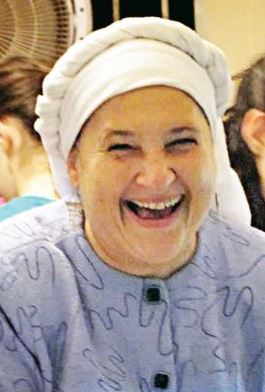
In 2016, a hefty new Artscroll biography was published whose cover stands out in the sefarim store among images of bearded rabbis. Emunah with Love and Chicken Soup is the story of the late Rebbetzin Henny Machlis, whose Jerusalem home was legendary for welcoming hundreds of guests each Shabbos, providing them with home-cooked meals as well as a deeper nourishment they may not have known they needed. The book is written by Sara Yoheved Rigler, author of Holy Woman and a frequent contributor to Aish.com. Rigler writes with a unique appreciation for holy Jewish women. While her books would probably not pass the academic smell test, she is able to convey the passion and fire of a great individual in her writing in a way that tends to escape her more polished peers. Henny Machlis as well as her husband Rabbi Mordechai Machlis were truly great individuals who stretched themselves beyond their individual egos to leave a remarkable legacy. Rigler writes in the book that when Henny was younger she used to say that she wanted to have 20 children and introduce Judaism to the entire world. She ended up having 14 children (with nine c-sections!) and inspired tens of thousands of Jews and non-Jews alike. She was, as the book jacket describes, “a virtuoso in chesed,” someone for whom the normal boundaries separating oneself from others is effaced.

For the full review, in the Jewish Link of NJ’s Literary Link, click here.

In Pursuit of Wholeness: The Book of Ruth in Modern Literature

In anticipation of the upcoming holiday of Shavuot, the Jewish Review of Books printed an adapted and shortened version of my essay in the newly released anthology Gleanings: Reflections on Ruth (Maggid Press, 2019).

“While not the most dramatic of all the biblical stories, the quietly moving book of Ruth, which we read on Shavuot, continues to resonate in Western literature. Sometimes the references are explicit, as when John Keats famously wrote, “Through the sad heart of Ruth, when, sick for home / She stood in tears amid the alien corn.” Yet we also encounter Ruth-like scenarios that draw on, or even undermine, the book’s central theme of chesed, or loving-kindness.

American novelist Marilynne Robinson and Israeli writer Meir Shalev invoke the Ruth story to tell biblically infused stories that expressly do not end in redemption. In contrast, S. Y. Agnon found a way to draw upon it while keeping the transformative spirit of the biblical narrative.”

To read more, see The Jewish Review of Books or for the full version the anthology is available on Amazon.


Aviva Gottlieb Zornberg’s Bewilderments: Reflections on the Book of Numbers

In this month’s Jewish Action I review Aviva Gottlieb Zornberg’s new-ish Bamidbar anthology.

Excerpt: Beyond offering specific insights, Zornberg presents an expansive framework for reading Tanach that sets her apart from nearly every interpreter out there. Her books are a true illumination of the Talmudic maxim which describes the Torah: “Turn it and turn it for everything is in it” (Avot 5:22). Zornberg highlights the remarkable potential of Tanach to reflect upon, and in turn be illuminated by, many of the deepest questions and concerns raised in continental philosophy, postmodern criticism and the field of psychoanalysis.

The full review may be read here