A Covenant of Earth and Sky

In the early hours of June 13 my family and I, like all Israelis, were awakened by the shrill sound of a phone alert. Israel had preemptively attacked Iran’s nuclear facilities. Momentous news, but I promptly put my pillow over my head and went back to sleep. Only when we woke up again later that morning did we realize that something historic had occurred. We also understood that a challenging period lay ahead.

We had only recently moved into a new home and, despite Houthis sporadically firing missiles in our direction, we had grown lax about running to our safe room, what Israelis call a mamad. Ours was filled with dust and leftover construction material. But on the day of the phone alerts—once we’d grasped the gravity of what was happening—we got to work. We spread a plastic mat over the floor, brought in a spare mattress, and set up a pack-and-play crib. The missile fire from Iran began in earnest that evening.

As the days wore on, we adjusted to the confines of this small space where emotions vacillated between fear, comfort from the presence of those we loved, and occasional irritation by those very same people. One mattress turned into four—each of our seven children laid claim to their own little spot. The more time we spent in our safe room, sometimes joined by friends or near strangers who needed a place to shelter, the more we acclimated ourselves to its deprivations and, occasionally, to its surreal benefits. Sociologists talk about the “third place,” which is an additional living space beyond home or work, like a synagogue, for example. These places expose us to people, ideas, and experiences beyond our immediate family and daily routines. During Israel’s twelve-day war with Iran our safe rooms also became a third place, introducing a new mentality and way of being that removed us from our day-to-day lives.

Read the full article, just recently posted online, from the Fall issue of Lubavitch International Magazine.

Kuma: The Story of the Jewish People

The Bible Lands Museum in Jerusalem is known for its collection of Near Eastern antiquities from the Biblical period. Yet amidst its galleries stands a startling cultural artifact of far more recent origin.

Kuma—meaning “Rise”—is a nearly ten-foot-long scroll depicting a dense, vivid, intellectually rich, and aesthetically stunning account of Jewish history. Its full title, Kuma, Mei Afatzim ve-Kankantum,” refers to the materials used to prepare ink for Torah scrolls and other sacred texts. Evoking an unfurled Torah scroll, Kuma is the high-school senior project of a brilliant young yeshiva student, artist and poet named Eitan Rosenzweig הי”ד. Staff Sgt. Rosenzweig, an Alon Shvut native and student in the Yerucham Yeshivat Hesder, served in the Givati brigade and was killed in Gaza in November 2023, at the age of 21.

Kuma weaves together Jungian theories of the unconscious, the mythologist Joseph Campbell’s concept of the heroic journey, and imagery drawn from Western art and Jewish history—some of which appear elsewhere in the Bible Lands Museum. Kuma also incorporates literary allusions to the Bible, Talmud, modern Hebrew literature, Eastern and Western general philosophy, and more. It is a work of art that one must study rather than merely observe.

The full essay can be read at Tradition Online.

Now We Act as If Everyone We Encounter Might Be Grieving

Some reflections on the Simchat Torah Massacre from my own vantage point here in Israel

On a beautiful Thursday during the middle days of Sukkot, my family took a day trip to the Golan Heights. We visited a newly developed national park called Sussita, which contains the ruins of the ancient Graeco-Roman city Hippos. It was also the site of a daring defeat of Syrian troops by ordinary residents of the nearby Kibbutz Ein Gev in Israel’s War of Independence. The site’s vivid explanatory movie had my older children mesmerized, but afterwards they started to ask questions. Are there still enemy soldiers waiting in those hilltops? Could it happen again? Could ordinary people have to fight like that to save their homes and their families? I answered, of course, by reassuring them: we live in different times today. It’s true there are people who wish to harm us but we live in a strong country with many layers of protection between children like you and those enemies. We admire the heroes of the past, but we’re grateful that we don’t have to live in such dramatic times.

On Simchat Torah two days later that reassuring narrative would collapse, and we entered a new reality, or perhaps returned to a very old one…

The full essay can be found in Mosaic Magazine as part of their excellent Gaza War symposium.

Invest in Your Future Family: A Mommash Parenting Podcast

While podcasts are not yet entirely in my comfort zone, I appreciated the invitation to talk to Lori Fein Ramirez about family life and some of challenges as well as opportunities that we’ve encountered. Lori’s hilarious summary below:

Sarah Rindner Blum, an author, literature professor, and mother to a “steps and stairs” family of seven children in twelve years, shares her insights on why having “one more kid” is worth the investment. Join us for deep reflections on how each child offers something unique and priceless, how different roles for mom and dad make it work, Israeli vs. American cultural attitudes toward children, why Shabbat is the center of her homemaking all week long, spontaneity versus planning, lots of candy, her semi-broken set of devices for her family, some favorite children’s books, making literature a part of your family lore, her trash-into-treasures child, a mouse named Bob, having a home life different than you had imagined, why there’s nothing like an American minivan, and why a Jewish mama only needs to cook once a week.

Feel free to give it a listen on Spotify, Apple, or wherever you listen to your podcasts, and make sure to follow Mommash: The Oy and Joy of Parenting for loads of wonderful parenting wisdom.

Tom Stoppard and Theodor Herzl in Jerusalem

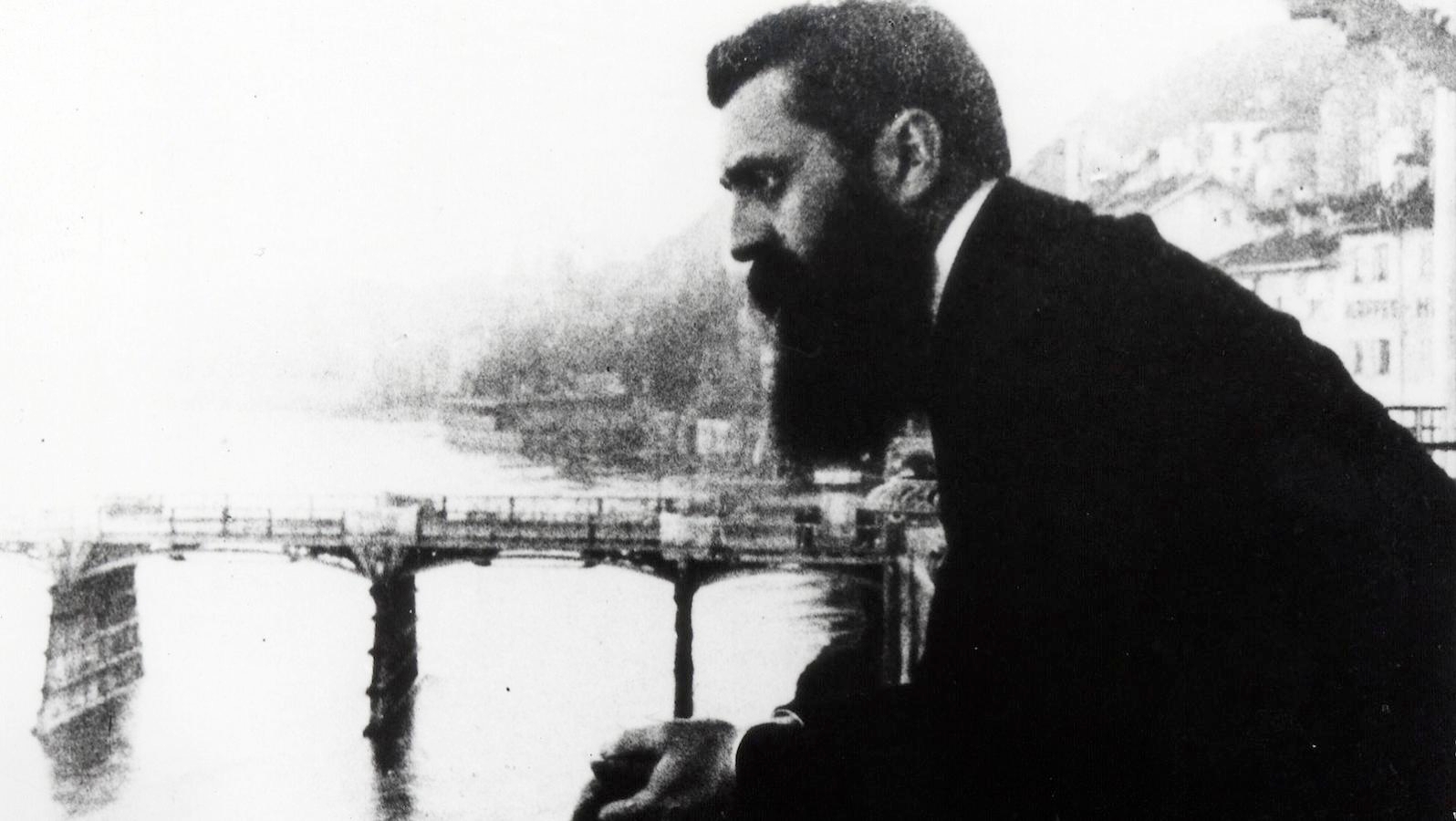
This past February 14th marked the 116th anniversary of the publication of Theodor Herzl’s manifesto The Jewish State, which lay the groundwork for the modern Zionist movement and the state of Israel. That same evening a special event took place in the Jerusalem Theater: a performance of Herzl’s play The New Ghetto, written in 1894, just a few short weeks before he began composing The Jewish State. It is commonly understood that the turning point for Herzl—the moment he realized there was no escaping from anti-Semitism even in enlightened Western Europe—was the Dreyfus Affair that began in the fall of 1894. Yet The New Ghetto, written shortly beforehand, is proof that, as some scholars have argued, a proto-Zionist sensibility had already been roiling in Herzl’s mind.

Last month’s production was a historic privilege for those who attended it: it was the first time the play has ever been performed in Israel. 

For more about this wonderful performance, as well as an intriguing parallel with Tom Stoppard’s newest play Leopoldstadt, please see my new essay in Mosaic Magazine.

Of Synagogues and Seinfeld: “ANU,” The New Museum of the Jewish People

In March, the Tel Aviv Jewish museum formerly known as the Nahum Goldmann Museum of the Jewish Diaspora(or Beit Hatfutsot) reopened after a ten-year, $100 million renovation. Now called ANU—Museum of the Jewish People, it offers a cheery, inclusive vision of Jewish peoplehood.

For the full review see here, in the wonderful new Summer issue of the Jewish Review of Books.

Frissons of Geulah

Thank you to Lubavitch International Magazine for the opportunity to consider what my own personal redemption might look like at this time. Please read the full article for wonderful contributions by the poets Yehoshua November, Eve Grubin and David Caplan.

Artwork by Sarah Kranz for Lubavitch International Magazine

This Is How It Begins . . . 

SARAH RINDNER

Two summers ago, while my family finalized our aliyah to Israel from the New Jersey suburbs, a few favorite songs found themselves repeating on our Spotify playlist. One was a catchy song by Israeli singer Udi Davidi called “See My Light,” which is in fact filled with rabbinic teachings about redemption. The refrain is a quote from Rabbi Hiyya’s statement in the Yerushalmi Talmud (Berachot 4:2): “This is how Israel’s redemption begins, little by little, everywhere it goes, it goes and multiplies.”  

The song gave me a little comfort as I spent the weeks packing up our life in the USA. When we first landed in Israel, and in the ensuing months, I certainly did not hear the bells of redemption ringing. Yet now, more accustomed to daily life and perhaps more sensitive to the spiritual nuances of the atmosphere here, not a few days pass by before I sense a little spark, a frisson, of redemption, geulah. These moments happen when I am out in nature, exploring the historically overloaded landscape of Israel. Vistas which appear in the Bible, were won and lost by numerous civilizations, and still remain a pleasant option for a Jewish family outing.

I feel redemption when my otherwise fully American children recite a verse from the Torah by heart like it is second nature, their natural sweetness blending with the sweetness of our tradition in a way that can’t be separated. Even as shops and businesses are shuttered because of the government’s response to the coronavirus, what should be a glum public mood is elevated by the goodness of the people of Israel. A young, secular smoothie-stand owner brought to his knees in debt still gives a free daily shake to every beggar who approaches his shop. Witnessing such an act of kindness, I looked at him with surprise and he pointed upward, “None of this is from us, you know?” I think I do know, little by little. 

When Heidi Met Shimen, or, Why Real Religion Endures

A review of Judaism Straight up by Moshe Koppel

Several years ago, a blog called Judaism Without Apologies began to circulate on social media. The blog began by juxtaposing two Jewish characters’ lives and ideals: Shimen, a Gerer Hasid of sorts and Holocaust survivor living on the Upper West Side of Manhattan, and Heidi, a cosmopolitan Princeton graduate who thinks of herself as a citizen of the world.

A photograph by George Kalinsky of my own Polish Holocaust survivor grandfather at the Siyum HaShas in 1990. I imagine Shimen having a similar intense, independent-minded look.


The series was narrated by the American Israeli computer scientist Moshe Koppel, who had attended Shimen’s Gerer shtiebel in his youth. After obtaining a PhD in mathematics, Koppel spent a year at Prince- ton’s Institute for Advanced Study, where he met the original Heidi, the first of many he would encounter in the years to come. Koppel’s blog may have been rooted in comic sociology, but it quickly morphed into a serious discussion of moral philosophy, game theory, cultural anthropology, the nature of language, and ultimately an argument about the future of Judaism itself. Despite its rather niche appeal, the blog’s unique fusion of a no-holds-barred attitude with serious erudition attracted some diehard fans. Koppel has just published an expanded book-length version, which presents a cleaned-up and even more compelling defense of the old-fashioned Judaism Koppel imbibed in the shtiebel.

Shimen, a real-life acquaintance of Koppel (Heidi is a composite), is at the heart of the book. He survived the Lodz Ghetto and Auschwitz, but his wife and two precious children did not. After the war, Shimen picked up a handgun and collected Jewish children who had been hidden by Polish families and returned them to their communities. Elie Wiesel, who prayed in Shimen’s Gerer shtiebel from time to time, once told a story about celebrating Rosh Hashanah in Auschwitz without wine. An inmate announced, “we’ll take out tin cups and fill them with tears. And that is how we’ll make our kiddush . . . heard before God.” That, apparently, was Shimen. Koppel writes of Polish Hasidic Holocaust survivors like him: 

[They] were intense, they were angry, they could be funny in a biting sort of way. . . . But one thing they had no patience for was high-minded pieties. They despised pomposity and self-righteousness. Their devotion to Yiddishkeit, old-fashioned Judaism, as a way of life, and to the Jews as a people, were as natural and instinctive as drawing breath.

To read the full review see the wonderful new issue of Jewish Review of Books.

The Rabbi Who Chose Trans Orthodoxy

“Shortly before the 1991 Gulf War, Rabbi Yaakov Smith, a father of six and an emissary of the Chabad Hasidic movement in the Old City of Jerusalem, hosted a Shabbat dinner. As the guests were leaving, one took Smith aside and said something that would reverberate with his host: “That was an amazing act you performed. Whatever is wrong, take care of yourself.” Fast forward thirty years and Yaakov has become Yiscah Smith, a transgender person who still lives and teaches in Jerusalem. Smith’s transformation is the subject of the documentary I Was Not Born a Mistake, created by the Israeli filmmakers Rachel Rusinek and Eyal Ben-Moshe. The film premiered at the Jerusalem Film Festival this past Hanukkah and made its U.S. debut in January.:

Read the full review at First Things.

Man Shouts What He is Missing: An Anthem for the Corona Lockdown

“In the last two weeks of seger (lockdown) in Israel, an almost laughably long list of public figures have admitted to violating the Covid-19 lockdown restrictions. Some of them are lawmakers who are themselves directly responsible for initiating the lockdown.”

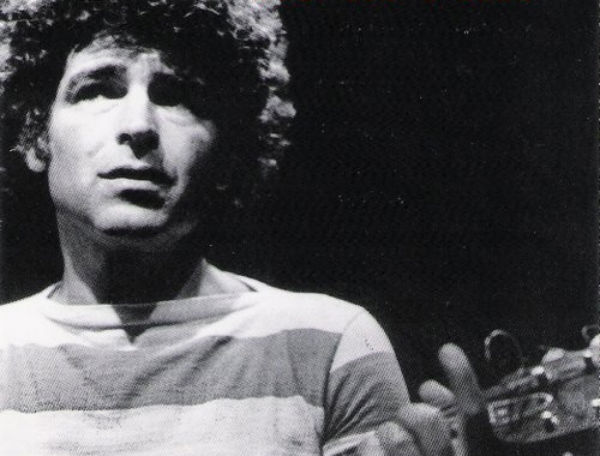
Join me as I try to explore what is going on here, with the help of the iconic Israeli musician Meir Ariel. On Arutz Sheva/Israel National News.